
ZRAY Compact Case Formers vs Traditional Large-Footprint Machines: 20-30 CPM in 2 m² | ZRAY
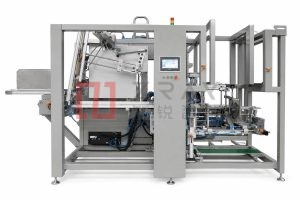
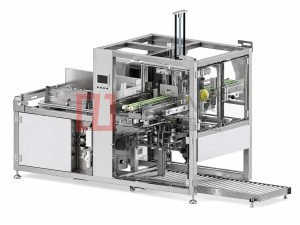
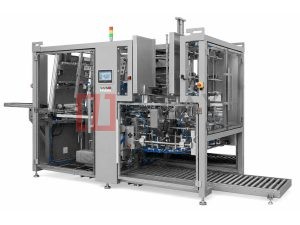
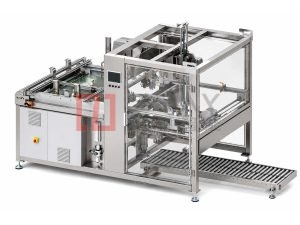
For decades the default assumption in packaging has been: a real case former is a long machine. Traditional large-footprint formers eat 8-12 m of line length, demand a dedicated area, and push small and mid-size plants into expensive layout compromises. ZRAY builds the opposite: a compact single-piece case former that delivers 20-30 CPM in roughly 2.0 × 1.5 m of floor space — a footprint a conventional machine needs just for its blank magazine and infeed. This article compares the two machine classes on the numbers that actually decide a layout: footprint, speed, case range, air and power consumption, changeover, and total cost of ownership.
Why large-footprint machines got large
Traditional erectors and formers are long for three engineering reasons, not by accident:
- Magazine + infeed. A horizontal blank magazine with a 500-1,000 blank capacity needs 2-3 m just to hold and feed the stack.
- In-line forming section. The square-up, flap folding, glue, and compression stations are laid out in a straight line, one after the other.
- Tape/glue compression. Compression sections for tape or hot melt run 1.5-3 m so the joint sets before the case exits.
The result is a machine that solves throughput at the cost of floor space. That trade was fine when the plant had 500 m² of empty hall. It stops making sense when floor rent is priced per square meter and a compact line can hit the same CPM.
What the compact design gives up — and what it keeps
A compact machine is not a “small” machine with reduced capability. It is a redesign of the machine axis. On a ZRAY compact single-piece former:
| Capability | Compact (ZRAY single-piece) | Traditional large-footprint |
|---|---|---|
| Footprint | 2.0 × 1.5 m | 8-12 m line length |
| Speed | 20-30 CPM | 30-45 CPM (single head) |
| Case range | L 200-600, W 150-500, H 80-400 mm | similar or wider |
| Board grades | single/double wall up to 7 mm | same or heavier |
| Glue system | hot melt 150-170°C | hot melt or tape |
| Changeover | 10-20 min, tool-light | 15-30 min |
| Operator | 1 (monitoring) | 1 (monitoring) |
| Typical cost | lower purchase + lower install | higher purchase + higher install |
The honest trade-off: above 35-45 CPM a single compact head is out of reach — you need either a compact double-head or a conventional high-speed machine. Below 30 CPM, the compact design delivers the same case quality at a fraction of the floor space. Most mid-size plants live below 30 CPM.
Footprint math: what 6-9 m² actually costs you
Compare two layout options for a plant needing 25 CPM:
| Cost item | Compact (2.0 × 1.5 m) | Traditional (10 m line) |
|---|---|---|
| Machine floor area | 3.0 m² | 15-20 m² (with service access) |
| Line length added | ~3 m | 10-12 m |
| Access aisle needed | 1 m on one side | 1-1.5 m both sides |
| Saved floor area | — | 10-15 m² |
| Saved floor value @ $800/m²/yr | — | $8,000-12,000/year |
At $800/m²/year for industrial floor, that 10-15 m² of saved space is worth $8,000-12,000 per year — enough to pay a meaningful part of the machine itself over a 5-year period. In a plant where the extra 10 m of line forces you to relocate a pallet area or a storage rack, the value is even higher because it eliminates a one-time relocation cost.
Air and power: the compact machine is cheaper to feed
A compact machine has fewer stations, fewer cylinders, and a shorter pneumatic network. Typical figures:
| Utility | Compact (20-30 CPM) | Traditional (30-45 CPM) |
|---|---|---|
| Air pressure | 0.5-0.7 MPa | 0.5-0.7 MPa |
| Air consumption | 250-450 L/min | 500-800 L/min |
| Power | 3.5-5.5 kW | 6-10 kW |
| Annual energy (one shift) | ≈ $600-1,100 | ≈ $1,200-2,000 |
The difference is roughly $600-900/year in energy plus lower compressor loading — on a two-shift line the gap doubles. Energy cost alone is not a buying reason, but it is a real line-item in the TCO comparison.
Speed and case range: what you must not sacrifice
Compact does not mean compromised on the two numbers your product depends on:
| Parameter | Value on ZRAY compact former |
|---|---|
| Speed | 20-30 CPM (1,200-1,800 cases/hour) |
| Case length | 200-600 mm |
| Case width | 150-500 mm |
| Case height | 80-400 mm |
| Board | single wall E/B/C, double wall EB/BC up to 7 mm |
| Glue tank | 150-170°C, insulated hose |
| Control | Siemens PLC, touch panel, recipe storage |
Board handling matches the large machines: E-flute (1.5-1.8 mm) and B-flute (2.5-3.0 mm) feed cleanly; BC-flute (6-7 mm) needs the flap folders gapped to caliper + 1-2 mm and, for heavy double-wall, the pre-break station. If your product needs a three-piece logistics box — the heavy, re-usable boxes used in automotive and e-commerce logistics — a single-piece compact former is the wrong class entirely. Three-piece boxes are formed from three separate blanks and need a dedicated Three-Piece Case Erector with its own magazine and folder system; footprint is larger, and there is no compact shortcut for the blank count.
When a compact machine does NOT fit
Apply these filters honestly before choosing compact:
- You genuinely need over 35-45 CPM. A compact single-head tops out around 30 CPM. For continuous high volume, look at a double-head machine instead — two compact heads on one frame still beat a conventional 10 m line on footprint while reaching 45-60 CPM.
- The box is three-piece or extra-heavy duty. Blank count decides the machine class, not the CPM.
- You have the floor space anyway. If your plant has a dedicated hall and no space constraint, the TCO argument for compact weakens — but so does the reason to pay a premium for a big machine. The savings go to your side either way.
- The line may grow past 60 CPM in 24 months. Plan the upgrade path now; a compact double-head frame can usually be extended or replaced without re-cutting the foundation.
Total cost of ownership, side by side
Five-year TCO for a plant running 25 CPM, one shift, mid-size case mix:
| Cost item | Compact | Traditional |
|---|---|---|
| Purchase (5-yr amortized) | $4,800-6,000/yr | $7,000-9,000/yr |
| Installation + foundation | $2,000-3,000 one-time | $8,000-15,000 one-time |
| Energy (one shift) | $600-1,100/yr | $1,200-2,000/yr |
| Air | $300-700/yr | $500-1,000/yr |
| Maintenance | 2-4% of value/yr | 2-4% of value/yr |
| Floor space | 3 m² | 15-20 m² |
| 5-year total (excl. floor) | $34,000-46,000 | $55,000-75,000 |
The compact machine comes out $15,000-30,000 cheaper over five years for the same output, before you value the floor space. That is the number to put on the CAPEX slide.
PLC alarms and maintenance on the compact machine
Compact layout changes the access pattern, not the control. Same Siemens PLC, same alarm family:
| Code | Alarm | Check | Fix |
|---|---|---|---|
| A100 | Air Pressure Low | regulator, leaks in compact network | adjust 0.5-0.7 MPa |
| A102 | Vacuum Low | filter, pad wear, warped blank | clean/replace filter and pads |
| A105 | Box Not Formed | glue empty, nozzle blocked | refill, clean nozzle, check 150-170°C |
| A110 | Glue Temp Low | heater, thermocouple | reset heater, verify temperature |
| A120 | Jam in Flap Folder | gap vs board thickness | set gap = caliper + 1-2 mm |
Maintenance schedule is the standard one-shift rhythm — the compact machine has fewer components to inspect, not more:
| Interval | Action |
|---|---|
| Daily | blow dust from sensors/guides; check glue tank level and 150-170°C; drain air trap |
| Weekly | clean glue nozzles; check suction pads; oil folder pivots |
| Monthly | measure folder gaps with feeler gauge; tighten belts; clean photo sensors |
| Quarterly | replace vacuum filter; inspect glue hoses; check pneumatic valves |
| Half-year | guide rail alignment check; replace wear pads; test safety interlocks |
The bottom line
Compact and traditional machines are not competing on capability — at 20-30 CPM a compact single-piece former produces the same case quality as a 10 m line. They compete on layout efficiency, and the compact design wins there by 10-15 m² of floor and roughly $15,000-30,000 in five-year TCO. Choose compact when your line fits under 30 CPM and your box is single-piece; choose a Double-Head High-Speed Case Former when volume passes 45 CPM; choose the three-piece machine when the box itself is three-piece.
Planning a line and want a layout comparison with your floor plan and case mix? Send us your dimensions, target CPM, and a sketch of the available floor area. Our engineers will confirm the machine class — compact, double-head, or three-piece — and send a footprint layout within 24 working hours.
- Email: [email protected]
- WhatsApp: +86 13681839278
- Contact ZRAY engineering
Want To Know More About Our Upgraded Machines?
Send your carton specifications and output demand, our engineer will provide free technical scheme & quotation
Latest Products
Subscribe To Get Latest News & Technical Guides
Leave your business email to receive free industry articles and new product updates