
How Different Paperboard Thickness Affects Carton Forming Machine Operating Performance
The 0.15mm That Broke a Production Run
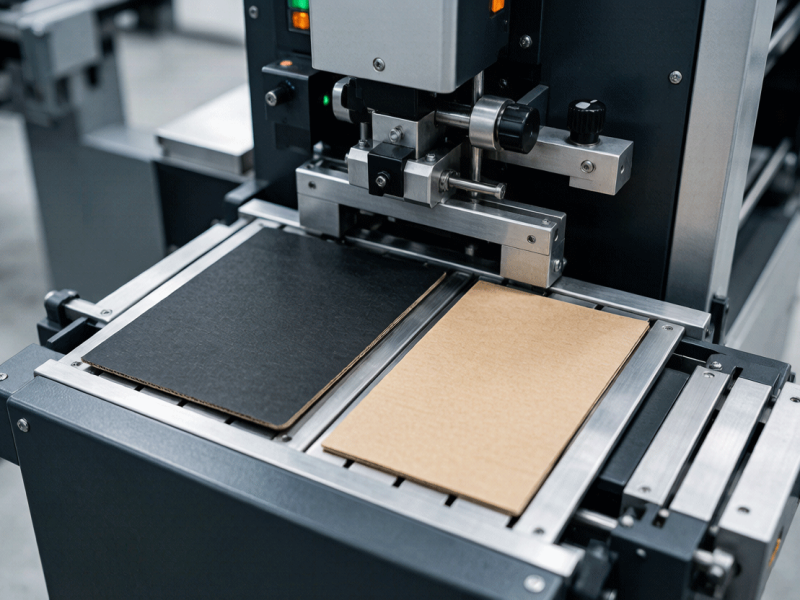
An electronics packaging client switched greyboard suppliers to save 8% on material cost. The spec was identical on paper: 1200gsm, 1.5mm thickness, grey back. Two weeks into the new supply, their Zray ZC-500 forming machine started producing cartons with visible corner gaps and inconsistent fold lines. Rejection rate climbed from 1.8% to 7.3%. The line supervisor blamed the machine. The maintenance team adjusted forming pressure twice, replaced the folding rails, and still couldn’t fix it.
I measured 20 sheets from the old supplier and 20 from the new one with a digital micrometer. The old board averaged 1.52mm with a standard deviation of 0.04mm. The new board averaged 1.67mm with a standard deviation of 0.11mm. Same grammage — 1200gsm — but 0.15mm thicker on average and nearly 3× the variation. The caliper difference came from the new supplier using a softer wood pulp blend with lower fiber density. More bulk per gram, less stiffness per millimeter.
The forming machine was set up for 1.5mm board. At 1.67mm, the folding rail gap was too tight, and the board was binding instead of sliding through the forming channel. The excess thickness also meant the glue roller was depositing too much adhesive — the gap was set for 1.5mm, so 1.67mm board was scraping more glue off the roller. Corners were squeezing out glue, contaminating the folding fingers and causing intermittent sticking.
Thickness vs. Grammage: Know the Difference
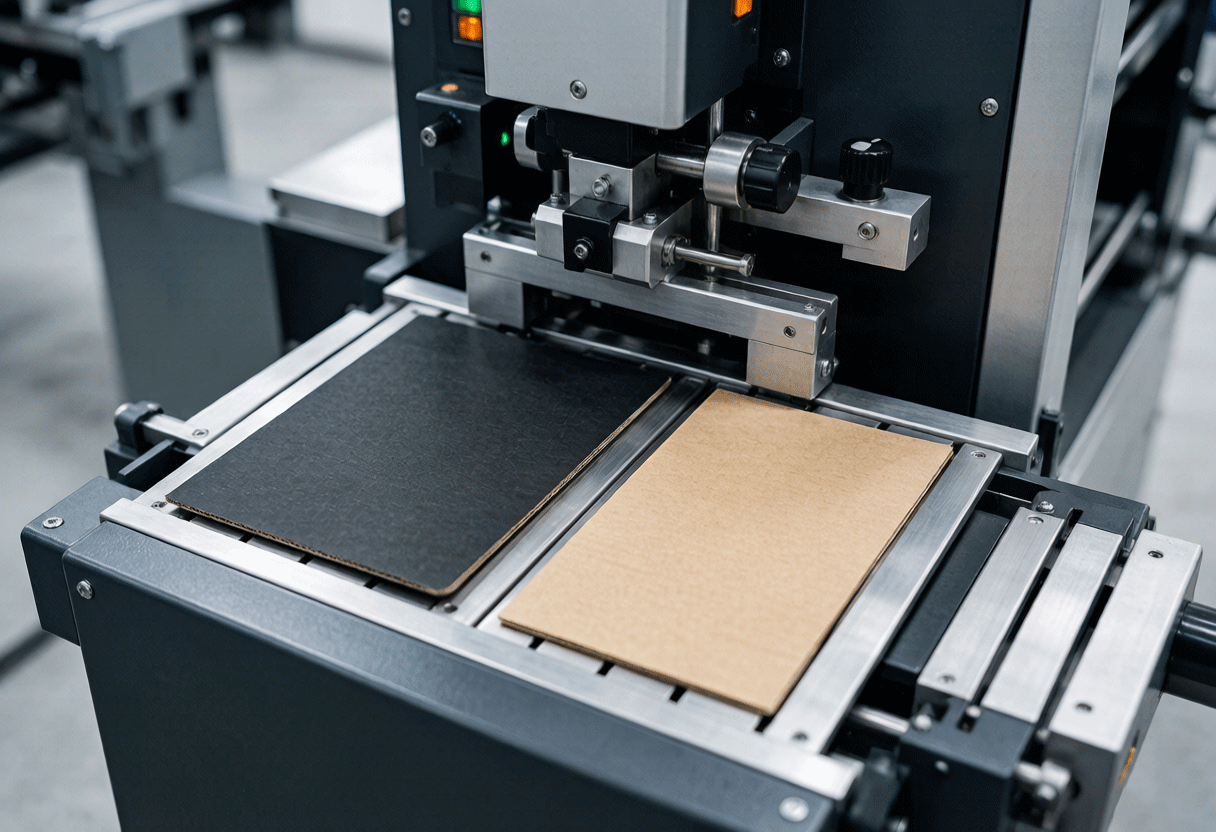
Grammage (gsm) measures mass per unit area. Caliper (mm or microns) measures physical thickness. Two boards can have identical grammage and different caliper, or identical caliper and different grammage. The relationship is density (g/cm³), which depends on the fiber type, filler content, and calendering process.
This matters because forming machines interact with caliper, not grammage. The folding rail gap, pressing plate stroke, and glue roller gap are all caliper-dependent parameters. If you change suppliers and only check grammage, you’re flying blind.
How Each Parameter Scales with Board Thickness
Folding rail entry gap: Should equal board caliper + 0.2mm. For 1.5mm board: set rails at 1.7mm gap. For 1.8mm board: 2.0mm gap. A gap too tight binds the board. A gap too wide (above caliper + 0.5mm) lets the board float and produces wandering fold lines.
Forming pressure (pressing plate): Scales roughly linearly with board caliper. If 4.0 bar gives clean fold lines on 1.5mm board, expect to need 4.6–4.8 bar on 1.8mm board. Don’t guess — run a pressure ladder: start at 3.5 bar, increase in 0.2 bar increments, form 10 cartons at each step, and pick the lowest pressure that gives consistent fold lines.
Glue deposition gap: Set to board caliper minus 0.5mm for typical water-based PVA adhesive. At 1.5mm board, gap = 1.0mm. At 1.8mm board, gap = 1.3mm. If you don’t widen the gap for thicker board, you get excess glue squeeze-out. If you don’t narrow it for thinner board, you get starved joints.
The Stiffness Problem: It’s Not Linear
Board bending stiffness scales with the cube of thickness, not linearly. A 10% increase in caliper produces roughly a 33% increase in bending stiffness (1.1³ ≈ 1.33). This means:
- A carton that folds cleanly at 1.5mm may crack or show fiber tear at 1.65mm because the bending radius at the fold line is too tight for the stiffer board.
- The forming plunger force required increases by roughly 30% for a 10% thickness increase. If the machine’s pneumatic system was sized close to its limit at the original thickness, the thicker board may cause under-forming.

Practical Calibration Procedure for New Board Stock
When you receive a new batch of board — whether from the same supplier or a new one:
1. Measure caliper on 10 random sheets from different positions in the pallet. Use a digital micrometer with 0.001mm resolution. Calculate mean and standard deviation.
2. If mean caliper differs by >0.05mm from your machine’s current setup: adjust folding rail gap, glue roller gap, and pressing plate stroke to match.
3. If standard deviation exceeds 0.06mm: reject the batch or negotiate a price reduction. High variation means the forming machine will never produce consistent cartons regardless of parameter tuning — you’re chasing a moving target.
4. Run a 50-carton trial at production speed. Measure critical dimensions on all 50. If Cp <1.0, the board variation is too high for your process window.
The Cost of Ignoring Board Variation
That electronics plant lost 6 days of production while they diagnosed the problem, returned the substandard board, and waited for replacement stock from the original supplier. Direct costs: roughly 48,000 RMB in scrap, rework, and downtime. Indirect cost: the board supplier relationship damage is harder to quantify but just as real.
The lesson: a 40 RMB digital micrometer and a 10-minute measurement routine at incoming inspection would have caught the problem before a single sheet hit the forming machine.
Want To Know More About Our Upgraded Machines?
Send your carton specifications and output demand, our engineer will provide free technical scheme & quotation
Latest Products
Subscribe To Get Latest News & Technical Guides
Leave your business email to receive free industry articles and new product updates