
Handling Soft & Low-Grade Recycled Corrugated Boxes at 5-20 CPM (200-500 gsm) | ZRAY
Recycled corrugated board is not what it was ten years ago. As post-consumer fiber content climbs, so do the failures on the case-erecting line: boxes that collapse in the hopper, panels that refuse to open flat, vacuum cups that slip on dusty, low-caliper board, and scores that crack instead of folding. We see it every week in customer trials. This article is a working engineer’s breakdown of why low-grade recycled board fails, which board grades you can realistically run, and exactly what changes on a ZRAY Single-Piece Case Erector so soft board still forms a square, tape-ready box at 5-20 CPM.
Why Low-Grade Recycled Board Beats Conventional Erectors
Most conventional erectors are tuned for one thing: stiff, fresh-fiber, virgin kraft board with clean scores. Recycled board inverts every one of those assumptions.
- Fiber shortening. Every recycling loop shortens the fibers. Short fibers mean lower Mullen burst strength and lower edge crush test (ECT) values. A 200-300 gsm recycled liner can measure 20-40% below virgin board of the same basis weight.
- Soft scores and weak creases. On recycled stock the score lines (creases) deform during printing and die-cutting. When the blank leaves the hopper, the panels do not snap open; they sag.
- Moisture pickup. Recycled fiber swells with humidity. At 60-80% RH in a warehouse, a low-grade blank can gain 2-4% moisture by weight, and its compression strength can drop by a double-digit percentage. Soft board turns into limp board.
- Surface dust. Recycled liners shed fiber dust onto vacuum cups. Slip losses spike, and the hopper stack feeds two blanks or none.
- Recovery spring. Low-ECT board lacks the stored spring energy to push panels open when the bottom folds against the platen. The machine has to do the work that the board used to do itself.
The result is the classic fault trio on conventional machines: Box Not Formed, Vacuum Low, and Carton Jam. On recycled board, those three alarms can take a 15 CPM line down to 6-8 CPM with an operator babysitting the hopper.
Board Grades You Can Feed ZRAY: Real Numbers
You can stop guessing what your recycled blanks will do. These are the flute and basis-weight ranges ZRAY erectors are designed to accept in production, not lab conditions.
| Flute | Caliper (thickness) | Typical basis weight | Typical use |
|---|---|---|---|
| E flute | 1.5-1.8 mm | 200-350 gsm | thin, small cartons, printed retail boxes |
| B flute | 2.5-3.0 mm | 250-400 gsm | medium boxes, single-piece erector default |
| C flute | 3.5-4.0 mm | 300-450 gsm | shipping cases, better compression |
| EB flute | 4.5-5.5 mm | 300-500 gsm | double-wall look, lighter alternative to BC |
| BC flute | 6.0-7.0 mm | 400-500+ gsm | heavy double-wall, palletized loads |
Two numbers matter more than flute name when you run recycled stock: basis weight of the liners (gsm) and ECT in kN/m. For soft-board trials we recommend you qualify blanks at 200-500 gsm with an ECT of at least 3.5 kN/m for single wall and 5.0 kN/m for double wall. Below those values, we will still run a trial for you, but we will set expectations first.
What Changes on a ZRAY Erector for Soft Board
We do not sell one setting for all board. A ZRAY Single-Piece Case Erector handles weak recycled stock through five concrete mechanisms.
1. High-flow, multi-chamber vacuum. The vacuum manifold is split into independent chambers, each with its own solenoid control. When a dusty recycled liner weakens the seal on one cup row, the other rows hold the blank in place while you clear the first row. Pump sizing is oversized by design, so momentary leakage does not trigger a machine stop.
2. Adjustable forming pressure, not fixed force. The forming platen and side guides move on regulated pneumatic cylinders. On soft board you dial back the forming force to keep the box square without crushing the flaps against the frame. On a rigid BC-flute box you raise it again. This is a 2-minute change on the operator panel, not a mechanical rebuild.
3. Score-line assist. For board with weak creases, the machine drives the fold through the full 90 degrees instead of relying on the blank’s recovery spring. The bottom flaps stay supported under the platen until the bottom is fully seated, which is what kills the “sagging bottom” failure on recycled blanks.
4. Dust-tolerant vacuum cups and a dedusting sweep. Cups are quick-change silicone with enlarged pickup area. If fiber dust accumulates faster than expected, a timed air purge keeps the cups clear between cycles. No manual scraping with a screwdriver at 9 a.m. every day.
5. Speed matching for limp panels. On the fastest recycled-board runs we cap feed speed to what the board can physically carry. A 200-350 gsm E-flute blank runs comfortably at 12-15 CPM; a dusty 450 gsm C-flute box runs at 8-12 CPM. You lose a few CPM on paper but keep real throughput, because the machine stops less.
Technical Specifications: Single-Piece Case Erector (Soft-Board Configuration)
| Parameter | Value |
|---|---|
| Rated speed | 5-20 CPM (board-dependent) |
| Box length (L) | 180-500 mm |
| Box width (W) | 150-400 mm |
| Box height (H) | 100-450 mm |
| Board grade | E, B, C, EB, BC flute; 200-500 gsm |
| Air pressure | 0.5-0.7 MPa (5-7 bar) |
| Compressed air consumption | approx. 300-450 L/min at rated speed |
| Glue/taping | tape head optional (bottom-tape configuration) |
| Electrical | 220/380 V, 50/60 Hz, 3-phase |
| Power consumption | approx. 1.5-2.5 kW running |
| Changeover time | 3-8 min per size change (stored recipes) |
PLC Alarms and Troubleshooting on Recycled Board
When soft board causes a fault, the ZRAY PLC shows a specific code. Here is what each one means and the order to fix it.
AL-01 Air Pressure Low
- Check main compressed air at the filter-regulator: must be 0.5-0.7 MPa at the machine inlet.
- Watch the gauge while the machine cycles. A dip below 0.45 MPa under load points to an undersized supply line or a clogged filter.
- Drain the water separator; recycled lines often run near humid compressors.
- If pressure holds but the alarm repeats, replace the pressure switch or check its setting against the PLC parameter.
AL-03 Vacuum Low
- Confirm the vacuum pump is running and the gauge reads the setpoint (typically -0.04 to -0.06 MPa on the manifold).
- Check cup condition and replace worn or cracked cups; dusty recycled liners wear cups 2-3x faster than virgin board.
- Verify blank size matches the recipe. An over- or undersized blank shifts the cup pattern off the liner.
- Clear the hopper area of loose fiber that can block the cup bores.
- If it persists, check the vacuum solenoid for a sticking spool and swap it.
AL-05 Box Not Formed
- Open the machine door and inspect the blank: if the panels sag instead of opening, lower forming force in the recipe by 10-15%.
- Check the score depth. Weak recycled scores need the score-line assist at full stroke; verify the fold cylinders are reaching end position.
- Confirm hopper tension. Too much hopper brake pressure warps soft blanks on pickup; loosen it until the blank separates cleanly.
- Re-teach the recipe and run a single-cycle test before returning to automatic.
AL-08 Carton Jam
- Power off, remove the jammed blank, and inspect for a double feed (two blanks stuck together).
- If double feed recurs, increase the separation air or adjust the hopper back-pressure gate.
- Check that the previous box cleared the discharge before the next cycle starts; a slow ejection on soft board needs the discharge speed raised slightly.
Maintenance Schedule for Recycled-Board Duty
Soft, dusty board is harder on a machine than clean virgin stock. Use this schedule, not the generic one.
| Interval | Task |
|---|---|
| Daily | Blow out vacuum cups and manifold; check cup wear; drain air filter; wipe feed belts |
| Weekly | Inspect and clean all vacuum cups; check hopper brake pad condition; verify air pressure at idle and under load |
| Monthly | Replace worn vacuum cups (budget 2-3x normal wear); clean the vacuum solenoid filters; grease guide rods; check score-assist cylinder stroke |
| Quarterly | Replace air filter elements; inspect pneumatic cylinders for leaks; verify PLC recipe setpoints against current board grade; clean fiber dust from electrical cabinet vents |
| Semi-annual | Full pneumatic system leak test; replace cups and seals as a set; check belt tension and tracking; re-torque forming-frame fasteners |
Which ZRAY Machine Fits Your Recycled-Board Line
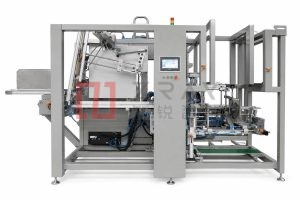
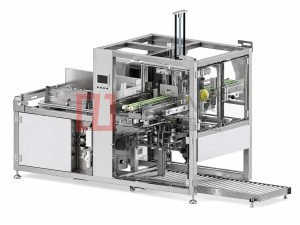
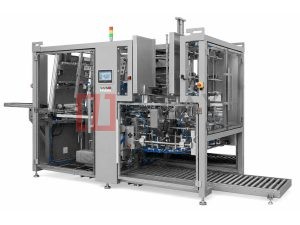
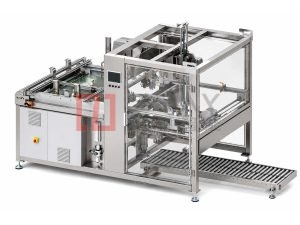
If your line runs mostly 200-400 gsm recycled board in small-to-mid volumes, the Single-Piece Case Erector is the direct fit; it gives you the vacuum-chamber control and adjustable forming force described above. For heavy recycled double-wall BC boxes used in palletized distribution, the reinforced frame and larger forming head of the Three-Piece Case Erector handle 400-500+ gsm board without flex, and for anything that needs both speed and soft-board tolerance, ask our engineers about the double-head configuration.
Before you commit, we will run your actual recycled blanks on our machine under video witness. You ship the board, we form boxes on it, you watch the trial remotely, and you only accept at FAT when your own cartons run clean.
Get a Quote for Your Board Grade
Send us your flute type, basis weight, box dimensions, and target CPM. We will confirm the correct model, a 45-day delivery schedule, and a price that includes CE/EAC compliance and your choice of tape or glue bottom sealing.
- Email: [email protected]
- WhatsApp: +86 13681839278
- Inquiry form: https://www.cartonerecting.com/en/contact/
Our sales engineers reply within 24 working hours, usually with a technical datasheet attached.
Want To Know More About Our Upgraded Machines?
Send your carton specifications and output demand, our engineer will provide free technical scheme & quotation
Latest Products
Subscribe To Get Latest News & Technical Guides
Leave your business email to receive free industry articles and new product updates