
Flat Blank Magazine Feeders on Case Erectors: Loading Efficiency and Jam Prevention
The magazine is the least engineered part of a case erector and the one that stops the machine most often. It holds a stack of flat blanks, separates one at a time, and presents it to the picking head — three functions that sound trivial and are not, because corrugated board is a flexible, dusty, hygroscopic material that resists being counted.
Understanding the magazine is the fastest route to fewer micro-stoppages, because most E-29 Blank Feed Timeout alarms originate there.
The Short Answer
Three magazine configurations exist, and the choice determines both the loading routine and the machine footprint.
A vertical magazine holds blanks vertically and presents them from the front or the side. It is the most common configuration, it loads quickly, and it occupies more height.
A horizontal or flat magazine holds blanks flat and presents them from the top. It has a lower profile and a higher capacity per unit of floor space, but it loads more slowly because each blank must be placed rather than the stack offered.
An inline magazine loads from the rear or the end of the machine so that the operator stands in the conveyor corridor rather than in a separate aisle. It is the configuration that saves floor space in a compact installation.
The practical loading target is 60 to 120 blanks per minute for a manual loading routine, which means a magazine of 200 blanks is refilled roughly every two minutes at 40 CPM and every seven minutes at 30 CPM. Refill frequency, not capacity, is what determines whether the operator can keep up.
The Three Functions of a Magazine
Holding. The magazine must hold the stack square and under controlled pressure. Pressure that is too low lets blanks fall out of alignment; pressure that is too high compresses the stack and makes separation harder.
Separating. One blank must be released at a time. Separation is achieved by friction, by vacuum, or by a mechanical gate — and each method fails differently.
Presenting. The blank must arrive at the picking location in a known position, square to the picking head and at a consistent height.
Most magazine problems are failures of the second function, and most of those trace to board condition rather than to the magazine mechanism.
Separation Methods and Their Failure Modes
Friction separation uses rollers or belts running against the bottom or top blank. It is simple and fast, and it fails when the friction surface glazes, when board dust fills the roller’s texture, or when the stack pressure varies.
Vacuum separation uses suction to pull the leading blank away from the stack before the pick. It is more reliable on difficult board and requires a dedicated vacuum circuit that must itself be maintained.
Gate separation uses a physical stop that allows one blank’s thickness through. It is exact for a consistent calliper and fails when calliper varies beyond the gate setting. This is the method most sensitive to board supplier changes.
The diagnostic question for all three is the same: does separation fail consistently or intermittently? Consistent failure points to a setting; intermittent failure points to board variation or contamination.
Loading Efficiency
Loading efficiency is determined by four things, and only the first is about the magazine.
Magazine capacity. Blanks per load. A large magazine reduces the frequency of refills.
Load accessibility. Whether the operator can load without stopping the machine. A magazine designed to accept blanks while running allows refills during operation; one that requires pausing the machine does not.
Blank handling path. How far the operator must carry blanks from the pallet to the magazine. A magazine that loads from the pallet side eliminates the carrying entirely.
Stack presentation. Whether the operator can load a full stack in one motion or must place blanks individually. This is the largest single time difference between magazine types: a vertical magazine accepts an offered stack, a flat magazine usually requires placing.
Board Conditions That Cause Magazine Jams
The list below covers the conditions that account for most feed alarms. Storage and handling criteria for board are set out in more detail in our support section.
| Condition | Effect on the magazine | Correction |
|---|---|---|
| Warp over 3 mm | Blanks do not separate cleanly; multiple blanks advance | Storage: pallets off the floor, correct stack height |
| Moisture below 6 per cent | Static holds blanks together; edge damage | Humidify the area; check static control |
| Moisture above 9 per cent | Blanks deform under stack pressure and jam | Humidity control; reduce stack height |
| Rough or torn blank edges | Edges catch on guides and stop the feed | Check blank cutting quality at goods-in |
| Excessive board dust | Friction surfaces glaze; separation becomes unreliable | Clean the magazine; check recycled board quality |
| Inconsistent calliper | Gate separation releases two blanks or none | Measure calliper; reset the gate per delivery |
The calliper row is the one most often encountered after a supplier change. A gate set for B-flute at 3.2 mm will not reliably pass a delivery at 3.0 mm or 3.5 mm, and the failure will be intermittent and therefore hard to diagnose.
Magazine Design Features That Matter
| Feature | Effect |
|---|---|
| Adjustable guide width with scale | Fast format change; settings reproducible |
| Detented or tool-free adjustment | Removes tools from the changeover routine |
| Stack pressure control | Prevents both loose stacks and over-compression |
| Load-while-running provision | Removes refills from the stoppage list |
| Rear or end loading | Keeps the operator in the conveyor corridor |
| Visible low-level indication | Allows refill before the magazine empties |
| Removable wear strips | Inexpensive maintenance rather than guide replacement |
The low-level indication row is worth attention. A magazine that runs empty mid-run produces a E-29 Blank Feed Timeout and a line stop. A visible or signalled low-level warning converts that into a planned refill.
Alarms Originating in the Magazine
| Alarm | Meaning | First three checks |
|---|---|---|
E-29 Blank Feed Timeout |
No blank detected at the feed station | Stack height, separation surface, blank warp |
E-12 Vacuum Low |
Pick-up vacuum below setpoint | Cup condition where separation used vacuum, filter, double blank |
E-41 Flap Detect Missing |
Flap not detected in position | Blank mis-feed from the magazine, fold rail, sensor |
E-33 Servo Follower Error |
Axis deviation beyond tolerance | Double blank adding mass, belt tension, obstruction |
E-29 Blank Feed Timeout is the magazine’s signature alarm. The three checks are ordered deliberately: stack height first, because an empty or low magazine is the most common cause and the cheapest to fix.
Maintenance Rhythm
Every shift — check stack height against the low-level indicator, verify that the stack is square in the guides, and confirm that the first blanks of the shift feed cleanly.
Every week — clean separation surfaces of dust and glaze, check guide alignment against the format scale, and inspect the stack pressure mechanism.
Every month — measure blank calliper on the current delivery and verify the gate setting, inspect wear strips for replacement, and review the frequency of feed alarms.
Every quarter — inspect guides for wear that changes the effective width, check separation rollers or belts for glazing, and audit whether the gate setting matches the board actually being run.
Annually — replace wear strips and separation surfaces, re-verify the magazine across the full format range, and re-baseline the loading routine against the refill frequency the operator can actually sustain.
What a Magazine Stop Actually Costs
Magazine faults feel minor because they are usually cleared in under two minutes. That perception is what makes them expensive.
A feed alarm that stops the machine costs the clearing time plus the restart time. On a machine running at 40 CPM, a two-minute stop plus a one-minute restart is three minutes, or roughly 120 cases of lost output. If the magazine generates six such stops per shift — a figure that is entirely normal on a machine running misfeeding board — that is 18 minutes per shift, 54 minutes across three shifts, or about 4.5 hours of lost machine time per week. Over a 4,000-hour operating year that is close to 11 per cent of available capacity lost to a component that nobody considers a problem.
The reason this matters is that magazine stops are invisible in the way that breakdowns are not. There is no maintenance ticket, no root-cause investigation, and no spares order. The loss is absorbed into the shift and attributed to “the board” or “the operator”. Where a plant measures only major stoppages, this category never appears in the data at all.
The practical instrument is a simple tally. Record magazine-related stops on the shift sheet for four weeks, separated from other stoppage causes. Plants that do this almost always find the magazine in the top three loss categories, and usually find that the majority of the stops cluster on one board delivery or one format — which points directly at the cause.
Two interventions pay back fastest against this loss. The first is gate setting verified against a measured calliper rather than against the previous setting, which eliminates the largest single cause. The second is a loading routine with a defined refill threshold — refilling at the low-level indicator rather than when the magazine empties, which eliminates the last-fifth-of-stack misfeeds that account for a disproportionate share of alarms.
FAQ
Why does the magazine jam more after a board supplier change?
Because the gate or separation setting is matched to the previous board’s calliper. Measure the new delivery and reset the gate, rather than adjusting until it works.
Can blanks be loaded while the machine runs?
On a magazine designed for it, yes, and it is a specification item rather than an accessory. On a magazine not designed for it, attempting to load while running is a safety risk.
How full should the magazine be kept?
Above the low-level indicator with margin. Running a magazine from full to empty gives the longest interval between refills but the highest risk of an unplanned stop.
Which magazine type is best?
Vertical for fast loading and simplicity; flat for low profile and high capacity; inline where floor space is the constraint. The full product range lists which configurations carry which magazine layout.
Is a larger magazine always better?
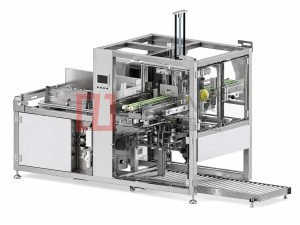
Only if the operator can keep up with the loading routine. A magazine too large to load comfortably will simply be run half empty. Blank definitions and standard board values are answered in our FAQ, and the picking and separation arrangement for a given machine is described on the Single-Piece Carton Erector page.
Fighting feed alarms or a slow loading routine? Send your blank dimensions, calliper, magazine type and the refill frequency your operator can sustain to [email protected] or WhatsApp +86 13681839278. Our engineers will recommend a magazine configuration with the matching loading routine within 24 hours.
Want To Know More About Our Upgraded Machines?
Send your carton specifications and output demand, our engineer will provide free technical scheme & quotation
Latest Products



Subscribe To Get Latest News & Technical Guides
Leave your business email to receive free industry articles and new product updates