
What Causes Unstable Carton Molding on Carton Forming Machine and How to Fix It

When 3.2mm of Drift Cost a Weekend of Production
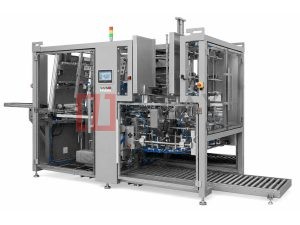
The call came at 9 PM on a Friday. A beverage packaging plant in Foshan had been fighting intermittent carton molding failures for three days. Their Zray ZC-400 was forming 300×200×150mm corrugated cartons for a tea gift set. Every 80–100 cycles, one carton would come out with the side panel bowed inward by 3–4mm. Just enough to jam the automatic lid-closing station downstream. They’d tried adjusting forming pressure, replacing the vacuum cups, even swapping the PLC — nothing fixed it.
I arrived Saturday morning. The root cause took 40 minutes to find: the forming-rail mounting bracket on the left side had a hairline crack propagating from a bolt hole. Under vibration at 40 cycles per minute, the rail was drifting 3.2mm laterally over about 90 cycles, then snapping back. The crack was invisible until we removed the bracket and dye-penetrant tested it.
Unstable molding is rarely one big failure. It’s usually cumulative small deviations — mechanical, pneumatic, or material-driven — that push the forming geometry outside its tolerance window.

The Five Most Common Root Causes and Their Fixes
1. Worn Forming Rails — The Gradual Drift
Forming rails guide the carton blank through the folding sequence. Over 500,000+ cycles, the rail surfaces wear unevenly — more at the entry curve where the blank first contacts the rail, less at the straight section. A 0.5mm wear groove is enough to deflect a 350gsm blank by 1–2mm during forming.
How to catch it: Run a dial indicator along the rail surface with the machine stopped. Any deviation over 0.3mm across the rail length is actionable. Don’t eyeball it; the human eye can’t resolve 0.3mm on a polished steel surface.
Fix: Rails on Zray machines are hardened to HRC 58–62. When they wear, don’t weld-repair — the heat-affected zone will soften the rail and accelerate future wear. Replace the rail. Cost: roughly 200–400 RMB per rail. Downtime cost if it fails mid-shift: far higher.
2. Vacuum Cup Degradation — Inconsistent Blank Pickup
Vacuum cups pick the flat blank from the magazine and transfer it to the forming station. Silicone cups start losing elasticity after roughly 300,000 cycles. The edge seal degrades, and the cup can’t maintain the 0.6–0.7 bar vacuum needed for consistent pickup. You get occasional missed picks or — worse — partial picks where the blank shifts during transfer.
Checklist at every shift start:
- Vacuum gauge reading at the cup manifold: must be 0.55 bar minimum with a blank loaded
- Cup lip condition: replace if you see edge cracking or flattening
- Cup height consistency across all four corners: within 0.5mm measured from the mounting surface
A set of 4 vacuum cups costs roughly 60 RMB. Replace them every 400,000 cycles or 3 months, whichever comes first. It’s the cheapest insurance against molding failures.
3. Air Pressure Fluctuation in the Plant Supply
Many packaging plants run multiple pneumatic machines off a single compressor loop. When the die-cutter cycles on, line pressure can dip from 6.5 bar to 5.2 bar for 2–3 seconds. If that dip hits during a forming stroke, the pressing cylinder doesn’t develop full force, and you get an under-formed carton.
Fix: Install a 50-liter buffer tank on the forming machine’s air inlet. This smooths pressure dips without upsizing your main compressor. The Zray ZC series has a recommended 6.0 ±0.3 bar operating pressure. A buffer tank holds that steady even when the rest of the plant pulls air.
4. Paperboard Moisture Content Variation
Board stored in an unconditioned warehouse can swing from 6% to 12% moisture content between dry winter and humid summer. At 12% moisture, 400gsm board loses roughly 25% of its bending stiffness compared to 8% moisture. The forming machine’s parameters are set for the board stiffness at conditioning — when the board softens, it folds differently.
Practical fix: If you can’t climate-control your board storage (most small plants can’t), create a seasonal parameter preset. Log the optimal forming pressure, rail gap, and pusher stroke for summer board (moisture 10–12%) and winter board (moisture 6–8%). Load the correct preset based on a moisture meter reading taken from a sample blank at shift start. A pin-type moisture meter costs ~200 RMB.
5. Accumulated Debris in the Forming Channel
Paper dust, glue overspray residue, and board fibers accumulate in the forming channel over time. A 0.2mm layer of compressed debris changes the effective channel width by 0.4mm (0.2mm on each side). On a 50mm deep carton, that’s nearly 1% of the forming dimension — enough to cause inconsistent panel alignment.
Maintenance interval: Blow out the forming channel with dry compressed air (max 2 bar, to avoid forcing debris into bearings) every 4 operating hours. Deep-clean with isopropyl alcohol and lint-free wipes every 40 operating hours.
The Diagnostic Sequence
When molding is unstable and you don’t know why, run this 3-step diagnosis in order:
1. Check rail wear with a dial indicator. If >0.3mm deviation, replace rail.
2. Log air pressure at the machine inlet for 30 minutes. If you see dips >0.5 bar, install a buffer tank.
3. Measure board moisture from 5 random blanks. If >2% variance, adjust parameters or condition board.
In my experience, these three checks find the root cause in 80% of unstable-molding calls. Start there before touching PLC parameters or servo tuning.
Want To Know More About Our Upgraded Machines?
Send your carton specifications and output demand, our engineer will provide free technical scheme & quotation
Latest Products



Subscribe To Get Latest News & Technical Guides
Leave your business email to receive free industry articles and new product updates