
Eco-Friendly Paper Packaging: ZRAY Sustainable Carton Erecting Solutions (Up to 40 CPM, <350 L/min Air) | ZRAY
Sustainability in corrugated packaging is not a label on the box. It is a set of engineering decisions: thinner board, less tape, lower air consumption, fewer rejects, and machines that run 24/7 without wasting a single blank. On a ZRAY case erector, those decisions are measurable — and in this article we give you the numbers so you can calculate what an eco-focused line actually saves.
Where the Environmental Cost Actually Lives
Run the numbers on a typical single-wall box line at 25 CPM, 16 hours a day, 5 days a week: about 120,000 boxes per month, roughly 1.44 million boxes a year. At an average blank weight of 300 gsm liner/flute, that is roughly 430 tonnes of corrugated board per year passing through your erector. Three levers decide how much of that material ends up in your customer’s hands versus the recycling bin:
- Board downgauging — switching from a heavier to a lighter grade for the same box size.
- Reject rate — every jammed or misformed blank that gets thrown out is wasted board and wasted energy.
- Sealing consumables — tape or glue per box, and the energy to apply them.
A case erector touches all three. Here is how.
Lever 1: Running Lightweight and Recycled Board Without Rejects
The main reason facilities keep using heavy board is not strength — it is that their erector jams on thin or recycled board. A modern machine with controlled vacuum and servo-driven feed handles light grades reliably.
Board grades a ZRAY erector handles with a low reject rate:
| Grade | Thickness | Basis weight | Typical saving vs next grade up |
|---|---|---|---|
| E-flute | 1.5–1.8 mm | 200–300 gsm | ~20% lighter than B-flute |
| B-flute | 2.5–3.0 mm | 250–350 gsm | standard e-commerce grade |
| C-flute | 3.5–4.0 mm | 300–400 gsm | high stacking strength |
| EB double wall | 4.5–5.5 mm | 400–500 gsm | replaces BC where crush is the driver |
If your product survives a drop test on B-flute but you currently buy C-flute because the old machine cannot feed it, the saving is roughly 10-15% of board weight per box — and that is material you never have to buy.
What makes light board run clean:
- Vacuum monitoring per pickup zone. Our machines fault on low vacuum before the blank slips — not after it jams. This is the difference between a controlled stop and a mangled blank that has to be scrapped.
- Magazine side guides set to board + 2 mm. Too tight and recycled board’s surface friction causes double feeds; too loose and warped blanks skew.
- Flap-folding dwell adjustable in the HMI. Soft, high-recycled-content board needs an extra 100-150 ms of fold dwell so the scores crease instead of cracking.
Recycled content is fine — we run up to 100% recycled fluting regularly — but the fiber is shorter and stiffer. The machine has to be tuned for it, and ours is, out of the box.
Lever 2: Cut Reject Rate, Not Just Speed
Rejects are the hidden sustainability killer. One misformed blank per 1,000 is 1.4 tonnes of scrap a year on the example line above; one per 100 is 14 tonnes.
What drives rejects on a case erector:
- Suction cups glazed or worn → blank slips → partial pickup → jam
- Vacuum filter clogged → pickup force drops below threshold
- Sensor dust film → false “no flap” signals → machine stops mid-cycle
- Air pressure dip under simultaneous cylinder strokes → late flap closure
Reject-control numbers to track:
- Target reject rate: < 0.1% of fed blanks (1 per 1,000) on a healthy line
- Troubleshooting time for a jam: 3-8 minutes; a month of one jam per shift adds up to 3-8 hours of lost line time
- Suction cup replacement: every 6 months of 24/7 operation; cost is small, the waste it prevents is not
PLC alarm codes you will use on the waste side:
| Code | Alarm | What it prevents |
|---|---|---|
| E01 | Air Pressure Low | skips and partial folds that create scrap |
| E02 | Vacuum Low | slipped blanks and double feeds |
| E05 | Double Feed Detected | two blanks fed as one, jammed and scrapped |
| E08 | Box Not Formed | half-formed box sent down the line |
| E12 | Servo Torque Fault | crushed flap caught on the mandrel |
Every one of these stops the machine before the bad box is made — and a box that is never made is a box that is never scrapped.
Lever 3: Sealing That Uses Less Consumable and Less Energy
Tape vs glue vs lock-bottom is an energy and material decision, not just a cost one:
| Sealing method | Consumable per box | Notes |
|---|---|---|
| Hot-melt glue | ~1-2 g of EVA/PSA pellet | gluing head needs 150–170°C, tank held at temp 24/7 unless scheduled shutdown |
| Pressure-sensitive tape | 150–500 mm of 48-75 mm tape | zero heat energy; tape weight adds to box weight and downstream recycling |
| Lock-bottom (self-locking) | none | strongest sustainability story, but needs a scored die-cut blank and tight flap accuracy |
Energy data you can plug into your calculation:
- A glue tank at 160°C draws roughly 1-2 kW just holding temperature — over a year of non-stop weekends that is 4-8 MWh of electricity with zero boxes made.
- A case erector uses 250-350 L/min of compressed air at full speed. Compressed air costs about 0.1-0.2 kW of electricity per 100 L/min of compressor capacity — so air is typically 30-50% of the machine’s energy bill.
- A servo-driven feed and mandrel cut cycle air consumption versus full-pneumatic designs, because the servos do the heavy move and air only does the clamping.
Practical steps we recommend on every eco-audit:
- Shut down the glue tank on a timer if the line stops for more than 1 hour; reheat from 100°C to 160°C takes 15-20 minutes and uses less energy than holding overnight.
- Measure and fix air leaks: a single 2 mm hole at 0.6 MPa leaks about 26 L/min — one leak the size of a pinhead can waste 1-2 kW of compressor power year-round.
- Use a pressure regulator at 0.6 MPa, not the compressor’s 0.7-0.8 MPa: every 0.1 MPa of overpressure raises air consumption roughly 5%.
Energy Consumption Reference Table
Ranges below are measured on ZRAY case erectors running at 60-70% of rated speed — typical for a mixed-shift line.
| Model | Speed | Air consumption | Power (installed) | Glue heat at temp |
|---|---|---|---|---|
| Single-Piece Case Erector | up to 25 CPM | 250–300 L/min | 4-6 kW | 1-2 kW (if glue option) |
| Double-Head High-Speed Case Former | up to 40 CPM | 300–350 L/min | 6-9 kW | 1-2 kW (if glue option) |
| Three-Piece Case Erector | 8-18 CPM | 250–350 L/min | 5-7 kW | 1-2 kW (if glue option) |
For an eco report, measure at the machine inlet with a flow meter during one full shift — the figure above is a planning baseline, not a guarantee.
Maintenance That Keeps the Line Green
Waste and energy climb the day maintenance slips. Keep this schedule and your reject rate stays under 0.1%:
| Interval | Task | Sustainability impact |
|---|---|---|
| Daily | blow down filters and water separator; wipe sensors | prevents false stops and scrapped mid-cycles |
| Weekly | inspect suction cups; verify magazine clearance | prevents slipped-blank rejects |
| Monthly | clean vacuum generator filters; check belt tension | holds pickup force and feed accuracy |
| Quarterly | soap-test pneumatic fittings for leaks | one fixed leak saves up to 1-2 kW year-round |
| Half-year | replace cups as a set; service tape heads | prevents the reject spike from worn parts |
| Annual | full inspection with ZRAY engineers | keeps reject rate and energy in spec |
The Machine-Side Answer
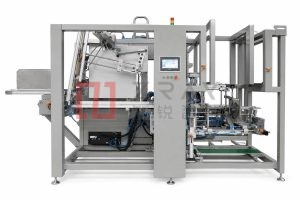
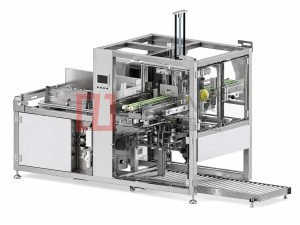
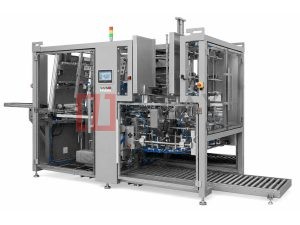
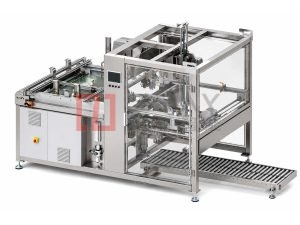
The sustainability story only works if the erector itself is efficient. Our Single-Piece Case Erector is the platform we recommend for eco-audited facilities at 10-25 CPM: servo feed, monitored vacuum, and an optional hot-melt head with a scheduled standby. For high-volume sustainable programs — beverage, food, retail — the Double-Head High-Speed Case Former Series reaches 40 CPM while keeping air consumption under 350 L/min and reject rates under 0.1% with the same monitoring logic.
Meeting Retailer and EU Packaging Mandates
The machine-side savings above matter double if your customers answer to packaging legislation. EU rules in force and coming cover recycled content, recyclability of the entire pack, and single-use restrictions. What that means at the erector:
- Recyclability is a design requirement, not a slogan. A fully paper lock-bottom box with no tape is easier to certify as recyclable than a taped box, and much easier than a glued box with a plastic lamination. If certification is in your roadmap, spec the lock-bottom scoring now — retrofitting a scored die-cut blank later means a new magazine and flap-folding profile.
- Recycled-content minimums drive you toward lighter, high-recycled-content board. As covered in Lever 1, that board is runnable — on the right machine.
- Lightweighting data is a sales tool. When a retail buyer asks for your packaging’s environmental numbers, you should be able to quote board weight per box, reject rate, and air/energy per 1,000 boxes. A ZRAY machine logs alarm history and cycle counts, so you can pull those numbers from the PLC instead of estimating.
If your customers have not asked yet, they will. The audit trail from your PLC is the cheapest way to be ready.
Measuring Your Own Eco Savings
Walk your line with a notepad and fill in:
- Board grade per box (g/m²) and annual box count
- Reject rate this month (rejects ÷ blanks fed)
- Compressor kW and actual air pressure
- Glue tank on-hours per week
Send those four numbers to our engineers and we will give you a board-downgauging estimate and an air-consumption comparison for your line — free, and usually with a payback figure. Email [email protected] or WhatsApp +86 13681839278. We answer within 24 working hours, and we can run the FAT using your own recycled and lightweight boards before you commit. You can also send your four line numbers via our inquiry page.
Want To Know More About Our Upgraded Machines?
Send your carton specifications and output demand, our engineer will provide free technical scheme & quotation
Latest Products
Subscribe To Get Latest News & Technical Guides
Leave your business email to receive free industry articles and new product updates