
ZRAY Servo-Driven Carton Erecting Machine (25 CPM, Double-Wall BC up to 7 mm) for Heavy Corrugated Boxes | ZRAY
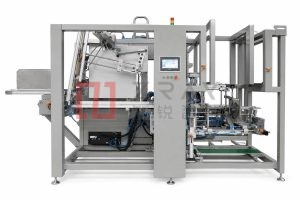
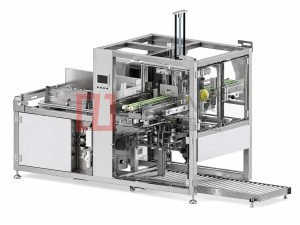
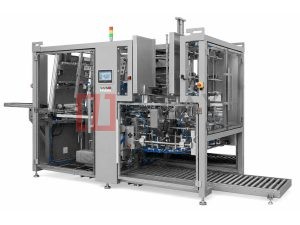
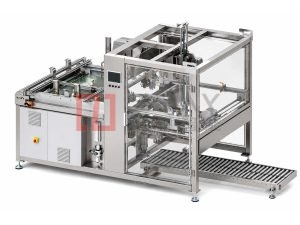
A pneumatic erector runs into a wall when the box is heavy: double-wall BC board at 6–7 mm fights the cylinders, the pick is unreliable, and every blank that weighs 800 grams beats up a mechanism tuned for 200-gram cartons. Our answer is a servo-driven carton erecting machine that holds 25 CPM on double-wall board up to 7 mm thick and 500 gsm paper, with the pick and forming strokes driven by position-controlled servo axes instead of air cylinders. This article explains where the servo architecture matters, the specifications you should hold a supplier to, and the operational detail — alarms, maintenance, changeover — for running heavy board all day.
Why heavy board breaks pneumatic machines
The physics is simple. A pneumatic cylinder produces force proportional to its bore and air pressure, but the speed and force cannot be tuned independently mid-stroke. When the blank is thick and stiff:
- The pick arm must first lift the full weight of the blank, then accelerate it. On double-wall BC board a blank can weigh 0.7–1.0 kg, and if the cup array lifts too fast the board bends; too slow and the vacuum seal breaks at the fold line.
- The forming stroke pushes a heavy blank through a mandrel. Thick board at a score line needs 1.5–2× the force of single-wall B flute, and pneumatic systems either stall (jamming the magazine) or slam through, wrinkling the flaps.
- Speed and force interact. You cannot run a 25 CPM cycle on pneumatic cylinders sized for heavy board — the cylinder travel time is fixed by air flow, not by the controller.
Servo drives change all three. The pick axis accelerates to a programmed profile, holds the blank against the cups with controlled deceleration, and the forming axis applies a force–distance profile you can tune per box size on the HMI. You get the force you need at 25 CPM without the stall/slam problem. This is the same engineering approach the ZRAY team used on lines for Mars and Duracell, and it carries over to the Three-Piece Case Erector platform for the heaviest logistics boxes.
Servo architecture: what it does in practice
| Axis | Pneumatic machine | ZRAY servo machine |
|---|---|---|
| Blank pick | Fixed air stroke, fixed speed | Position-controlled profile; speed and deceleration tuned per board |
| Forming | Cylinder full stroke | Force–distance profile; stalls on jam instead of slamming |
| Squaring | Passive guides | Active servo squeeze on the mandrel, repeatable to ±1 mm |
| Magazine pusher | Gravity/spring | Servo-controlled pressure, avoids crushing blanks |
| Changeover | Manual stops | Motorized stops recalled from recipe memory |
The practical result is visible in two numbers: box squaring accuracy ±1 mm on the corners, and jamming rate below 2% on double-wall board at rated speed. Those two numbers decide whether a heavy-box line runs 23 hours a day or 16.
Technical specifications
| Parameter | Value |
|---|---|
| Speed | 20–25 CPM continuous on double-wall; up to 30 CPM on single-wall |
| Box length (L) | 300–800 mm |
| Box width (W) | 200–600 mm |
| Box height (H) | 150–500 mm |
| Board types | Single-wall B (2.5–3.0 mm), C (3.5–4.0 mm), double-wall EB (4.5–5.5 mm), BC (6–7 mm) |
| Paper grammage | 200–500 gsm |
| Max blank weight | 1.2 kg |
| Air pressure | 0.5–0.7 MPa (auxiliary use only) |
| Air consumption | 60–120 L/min (servo axes use no air) |
| Electrical | 380 V / 50 Hz, 3-phase, 7.5 kW |
| Servo axes | 4 (pick, forming, squaring, magazine) |
| PLC | Siemens with 10-inch HMI, recipe storage for 50 box sizes |
| Sealing | Tape 4.8–7.2 cm or hot melt glue 150–170 °C |
| Changeover | 8–15 min motorized, no tools for width/height |
The low air consumption number deserves attention. Because the heavy axes are servo-driven, the machine needs air only for the sealing head and a few auxiliaries — 60–120 L/min instead of the 250–400 L/min a pneumatic heavy-duty unit draws. On a two-shift line that cuts compressor energy by 2,500–4,000 kWh per year.
Board handling: the point of a heavy-duty machine
The servo machine is tuned for the range in the table, with three specifics that matter on real production board:
- Double-wall BC at 6–7 mm is the design center. This is the board used for export cartons, appliance packaging and freight boxes. The mandrel and cup array are sized for it, and the servo pick profile holds the blank flat through the fold.
- EB at 4.5–5.5 mm runs at the full 25 CPM; BC at 6–7 mm runs at 22–25 CPM depending on grammage. The difference is board stiffness, not machine limit.
- Grammage 200–500 gsm, and the vacuum system auto-adjusts per recipe. High-grammage recycled board — the soft kind that jams pneumatic feeders — is actually easier for a servo picker, because the profile is timed, not force-limited.
If your product goes into a heavy master carton or a three-piece box for palletized export, the Three-Piece Case Erector covers those blanks. The servo single-piece machine handles the regular RSC heavy cartons at high rate.
PLC alarm codes and troubleshooting
The Siemens controller logs fault families shared across the ZRAY line. For heavy-board operation, these four matter most:
E01 Air Pressure Low
- Open the main air valve; confirm 0.5–0.7 MPa at the regulator.
- Check the FRL filter — a clogged element starves the sealing head.
- Inspect tubing from manifold to cylinders for leaks; heavy-duty lines vibrate more, so check fittings weekly.
E02 Vacuum Low
- Verify −0.06 to −0.08 MPa during the pick cycle on the gauge.
- Check suction cups for wear — heavy blanks wear cups faster; replace at the quarterly mark, not the annual one.
- Confirm the vacuum pump is sized for double-wall; if blanks above 1 kg lift slowly, upgrade the pump.
E04 Servo Axis Fault (pick or forming)
- Read the fault text on the HMI; most servo faults are overload or tracking errors.
- Check for a physical obstruction in the forming area — a jammed blank triggers this before mechanical damage.
- Clear the jam, then home the axis from the HMI. Do not cycle the machine until both pick and forming axes show “HOMED.”
- If the fault repeats at the same position, check the linear guides for debris and re-lubricate.
E08 Tape/Glue Unit Fault
- Tape: check roll tension and blade for adhesive build-up.
- Glue: confirm tank temperature 150–170 °C and clear the nozzle.
- Reset only after the physical check.
Because the servo axes stop on jam instead of fighting through it, the E04 sequence is the one you will actually use most. Train operators on it; a home-and-resume cycle takes under 5 minutes.
Maintenance schedule
| Interval | Task | Time |
|---|---|---|
| Daily | Drain FRL, check suction cups, wipe tape/glue path, check air lines for vibration wear | 15 min |
| Weekly | Grease linear guides and servo ball screws; check belt tension; verify vacuum gauge | 25 min |
| Monthly | Clean air filter, inspect servo connectors, check torque on structural bolts | 45 min |
| Quarterly | Replace suction cups, inspect servo motors for overheating, clean glue nozzles | 2 h |
| Semi-annual | Full panel inspection, re-torque frame, calibrate servo home positions, replace tape blades | 0.5–1 day |
Double-wall board transfers more shock into the frame than single-wall. The semi-annual re-torque step is not optional on heavy-duty units — we have seen frames shake loose in plants that skip it.
Changeover and recipes
The 50-recipe memory is the hidden productivity win. Each recipe stores box size, servo profiles, vacuum level, tape/glue settings and conveyor speed:
- Width/height change: 8–15 minutes, motorized, no tools.
- Depth change (new mandrel): add 10–15 minutes; the recipe recalls the forming profile automatically.
- Full board-type change: about 25 minutes including vacuum tuning.
For a plant running 6 SKUs in two wall types, recipe recall cuts changeover time roughly 60% versus manual adjustment. Operators stop measuring and start confirming.
Delivery, warranty and service
- CE and EAC certified, built to EU and Russia/CIS compliance.
- 12-month warranty; Siemens, Schneider and SMC components throughout.
- FAT before shipping with your heavy board blanks, video-witnessed remotely if needed.
- 45-day custom delivery; sales engineers reply within 24 working hours.
- Payment: 50% advance, 40% after FAT acceptance, 10% warranty balance; L/C for bulk orders.
The ZRAY engineering team holds 66 patents, 8 of them invention patents, and reinvests more than 10% of revenue in R&D annually. The servo machine is the current generation of that investment.
Run your heavy board past us
Send us your box sizes, board construction (wall type, flute, grammage) and target CPM. We will confirm the servo configuration, estimate the jam rate on your actual board, and quote a machine that holds its rated speed on double-wall — not one that needs the speed turned down on real production. Email [email protected] or message WhatsApp +86 13681839278; a sales engineer responds within 24 working hours. You can also submit your specification through the contact page.
Want To Know More About Our Upgraded Machines?
Send your carton specifications and output demand, our engineer will provide free technical scheme & quotation
Latest Products
Subscribe To Get Latest News & Technical Guides
Leave your business email to receive free industry articles and new product updates