
ZRAY Food-Grade Carton Erector for High-Speed Food Packaging Lines (Up to 40 CPM, Washdown-Capable) | ZRAY
Food packaging lines are audited, not just run. A case erector in a food plant is judged by two standards at once: how many boxes it makes per minute, and whether it can survive — and help you pass — a food safety audit. A machine that jams on frozen-food board or leaks grease onto product contact surfaces fails both.
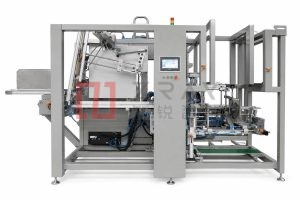
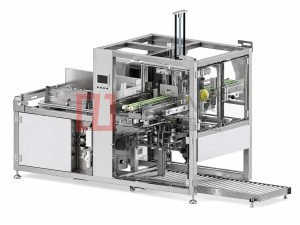
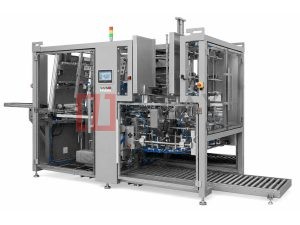
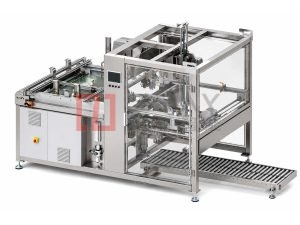
ZRAY builds case erectors for food lines with the engineering you need for BRC/IFS/HACCP programs: washdown-capable construction, NSF H1 food-grade lubrication, sealed bearings, and stainless steel on the surfaces that matter. This article covers the food-grade build details, the parameters for high-speed food runs up to 40 CPM, the cleaning SOP, and the maintenance that keeps a food plant audit-ready.
What “Food-Grade” Means on a Case Erector
Food-grade is not a single feature — it is a stack of decisions across the machine:
- Washdown-capable construction. The frame and panels are stainless steel (SS304/SS316 where product contact is possible), with sealed electric boxes and IP-rated controls, so the machine survives daily washdown with detergents and high-pressure water.
- NSF H1 food-grade lubricants everywhere. Every pivot, bearing, and gearbox runs on H1-registered grease and oil. No standard grease touches the machine. This is the line item auditors ask about first.
- Sealed bearings. Food plants run humid and wet; unsealed bearings corrode in months. We fit sealed/single-shielded bearings on all high-risk pivots.
- No horizontal ledges where debris collects. Structural design avoids flat ledges and open channels above the box path, so dust and product residue do not accumulate where a box will touch.
- Material documentation. We can supply material certificates for food-contact components to support your audit file.
On the board side, food lines typically run B-flute 2.5–3.0 mm or C-flute 3.5–4.0 mm single wall at 250–400 gsm — standard food-service grades with good crush resistance for chilled or frozen product. We also run EB double wall 4.5–5.5 mm for heavy frozen master packs.
Speed and Parameters for Food Lines
Food packaging runs are usually 2-3 shifts with short cleaning windows, so the machine must hit rated speed quickly and hold it. Our food-grade configuration:
| Parameter | Value |
|---|---|
| Speed | up to 40 CPM (double-head) / 25 CPM (single-piece) |
| Box size range L×W×H | 200–600 × 150–450 × 100–500 mm |
| Board grades | B-flute 2.5–3.0 mm, C-flute 3.5–4.0 mm, EB double wall 4.5–5.5 mm |
| Board basis weight | 250–400 gsm (up to 500 gsm for double wall) |
| Air supply | 0.5–0.7 MPa, 300–350 L/min at full speed |
| Washdown | SS304 frame, IP65-rated junction boxes, NEMA-4X-style control enclosure |
| Lubrication | NSF H1 everywhere, no standard grease |
| Changeover time | under 5-6 minutes for size changes on the same flute |
Two food-specific settings matter in the HMI:
- Cold-room mode. For chilled/frozen lines, the flap-folding dwell extends automatically when ambient temperature drops below 10°C, because cold board is stiffer and springs back harder. This is one reason our frozen-food installations hold their CPM in winter.
- Washdown restart. After washdown, the machine runs a self-check sequence (sensor verification, no product in the box path) before returning to auto — the cleaning crew cannot accidentally start the line with a sensor still wet or covered.
Cleaning SOP for a Food-Grade Erector
Your audit will ask for the cleaning procedure. Here is the SOP our food customers run:
| Step | Action | Notes |
|---|---|---|
| 1 | Isolate and lock out | air off, main disconnect off, per plant LOTO |
| 2 | Remove loose debris | vacuum or blow off corrugated dust from the magazine area |
| 3 | Wash | mild detergent, low-pressure or foam cleaning; avoid high-pressure water into bearings |
| 4 | Rinse | potable water, top to bottom |
| 5 | Dry | compressed air blow-off at 0.3-0.4 MPa max into the control side |
| 6 | Lubricate | re-grease H1 points listed on the machine’s lube card |
| 7 | Verify | run the self-check sequence, confirm sensors dry and aligned |
| 8 | Document | record washdown in the food-safety log, per your plant’s schedule |
Frequency: daily washdown for lines with exposed product, or per the audit schedule for dry-packaging lines. The corrugated board itself sheds dust, so a weekly deep clean plus daily dust blow-off is typical.
PLC Alarms on a Food Line
The standard alarm set applies, plus food-specific faults you will meet:
| Code | Alarm | Cause | Fix |
|---|---|---|---|
| E01 | Air Pressure Low | compressor dip under load | restore pressure; check receiver sizing for washdown cycle overlaps |
| E02 | Vacuum Low | moist air condensing in the vacuum line | check dryer and water separator; clean filter — food plants are wetter |
| E08 | Box Not Formed | cold board spring-back after fold | check cold-room mode is enabled; verify board temperature ≥ 8°C |
| E23 | Sensor Wet | photoelectric sensor after washdown | dry sensor and connector; check IP rating of the sensor housing |
| E15 | Glue Temp Low | glue tank below setpoint after cleaning | wait for reheat (15-20 min from 100°C) before restart |
Note E23: on washdown lines, sensors are the most common false-fault source after cleaning. We specify IP67 sensors on washdown builds and route cabling so water cannot run into connectors.
Temperature and Humidity Effects You Will Hit in Practice
Food plants are the least stable environment for corrugated. Three conditions cause most of the quality issues we debug on food lines:
- Chilled/frozen hall at 2-8°C. Board gets stiff, scores resist folding, and tape adhesive stiffens. Keep board in the pack line area 2-4 hours before the run so it reaches the machine at a stable temperature; our cold-room mode compensates for what is left.
- Washdown humidity spikes. After washdown, ambient humidity can hit 80-90% for an hour. Moisture soaks into stored blanks, softening scores and changing cup grip. Store the day’s blanks in a covered rack, not open on a pallet, and let the vacuum system’s water separator run before restarting.
- Hot summer air. In plants without cooling, board moisture drops below 6%, scores crack, and tape adhesion suffers. A humidifier on the blank storage area is cheaper than a reject spike.
The measurable impact: on a 40 CPM food line, board temperature below 8°C or humidity above 75% typically raises flap spring-back rejects by 1-3% until compensated. Cold-room mode and covered storage close most of that gap — the machine cannot fix board that arrived wet, but it can hold a line stable when board arrives in spec.
Food-Safety Audits and Documentation
A case erector is rarely the audit’s main focus, but it is on the equipment list. What an auditor typically checks:
- Lubricants: H1 certificates on file for every grease point.
- Material certificates for stainless components.
- Cleaning records showing the SOP above was followed.
- No standing water or product residue on the machine.
- Alarm and maintenance logs proving the machine runs controlled, not patched.
We supply the lubrication card, H1 certificates, and material documentation with the machine, and our remote diagnostics read the Siemens PLC log so you can pull maintenance history for an auditor without a separate system.
Maintenance Schedule (Food-Plant Version)
| Interval | Task |
|---|---|
| Daily | blow down filters and water separator; wipe sensors; verify no moisture in air line |
| Weekly | inspect cups for glazing from detergent residue; check guide clearance |
| Monthly | re-grease H1 points per lube card; check washdown seals and gaskets |
| Quarterly | inspect bearings for corrosion; verify sensor IP seals; check compressed-air dryer |
| Half-year | replace cups; service tape/glue heads; verify accuracy with test blank |
| Annual | full ZRAY inspection; replace seals; review alarm and washdown logs |
One trap on food lines: detergent residue dulls suction cups. If cups start losing grip after washdown weeks, it is often detergent film, not wear. Wash cups in warm water monthly and replace them as a set twice a year.
Building the Right Machine for Your Food Line
For high-volume frozen, chilled, or ambient food lines at 25-40 CPM, the Double-Head High-Speed Case Former in food-grade build delivers sustained speed with cold-room mode and washdown capability. For plants at 10-25 CPM with a compact footprint — bakeries, fresh produce, small-batch food — the Single-Piece Case Erector covers the same food-grade spec at a lower capex.
Spec Your Food Line With the Right Build
Tell us your ambient conditions (cold-room or washdown), your board grade, and your target CPM. Our engineers answer within 24 working hours with a food-grade specification, the H1 lubrication card, and a FAT plan where you run the machine on your actual food-line board before shipping. You can also send your board grade and CPM target via our inquiry page. Email [email protected] or WhatsApp +86 13681839278.
Want To Know More About Our Upgraded Machines?
Send your carton specifications and output demand, our engineer will provide free technical scheme & quotation
Latest Products
Subscribe To Get Latest News & Technical Guides
Leave your business email to receive free industry articles and new product updates