
ZRAY Automatic Case Formers for Heavy Wine Bottles (BC Flute up to 7 mm, 500 gsm) | ZRAY
A pallet of 750 ml wine bottles weighs between 500 and 700 kg. Each bottle alone is 1.1–1.3 kg of glass plus liquid, and a full case of 12 bottles lands at 13–16 kg. Now put that case on a vessel for six weeks, stacked five pallets high, in 60–90% humidity, and you understand why wineries obsess over one thing: the case has to keep its squareness from the carton erector to the retail shelf.
This article explains how ZRAY automatic case formers protect heavy wine bottles during long-distance shipping — not with vague promises, but with the exact mechanical parameters, board specifications, and quality checks that make a formed case survive the journey.
Why Wine Cases Fail in Transit
Before talking about the machine, look at the physics. A case fails in one of four ways:
- Bottom flaps open or delaminate under the stacked weight. Stacking 5–6 layers means the bottom case supports 60–80 kg of load through the flaps.
- The case loses its squareness (side walls bow, top opening deforms), so the layer pattern on the pallet shifts, and the stack topples.
- Bottles knock each other inside a too-loose case. Glass-to-glass contact in transit breaks corks and chips necks.
- Humidity softens the board. At 80% relative humidity, corrugated board can lose up to 40% of its compressive strength. A case that passed the edge crush test at 25 °C / 50% RH may collapse in a container.
The erector cannot fix the board grade you buy, but it can control every variable downstream: flap alignment, compression, sealing, and dimensional repeatability. A machine that forms every case within ±1 mm is the difference between a stable pallet and a warehouse claim.
Board Specifications That Win the Long Trip
The correct board for heavy wine is almost always double-wall. Our recommendation matrix for a 12-bottle wine case:
| Container size | Recommended board | Flute thickness | Typical grammage | Edge crush (ECT) target |
|---|---|---|---|---|
| 1.5 L bottle (6-pack) | EB double-wall | 4.5–5.5 mm | 350–400 gsm | 8–10 kN/m |
| 750 ml bottle (12-pack) | BC double-wall | 6–7 mm | 400–500 gsm | 10–12 kN/m |
| Export, multiple stacking layers | BC double-wall, high performance | 6.5–7.5 mm | 450–500 gsm | 12+ kN/m |
For export through the EU and Russia, we commonly see customers specify BC flute, 450 gsm, ECT 11 kN/m with a water-resistant coating. That board is stiff. It resists folding, it resists feeding, and it punishes a weak erector with jams.
This is exactly where a ZRAY machine earns its keep. Our case formers are built to handle 200–500 gsm board and flute profiles from E (1.5–1.8 mm) through BC (6–7 mm). The forming head uses a deeper scoring register and a stronger vacuum system so that double-wall blanks — which spring back aggressively after bending — stay locked in position during the sealing stroke.
The Four Machine Functions That Protect the Bottles
1. Controlled vacuum pickup
Heavy double-wall blanks weigh 250–450 g each. A weak vacuum system drops blanks, double-feeds, or picks two sheets at once. Our formers hold −0.06 to −0.08 MPa at the cup during the erecting stroke, with a dedicated Venturi block per suction group. Two-layer detection (photoelectric + vacuum switch) prevents double-blank feed, which is the leading cause of machine damage and misshapen cases.
2. Mechanical flap folding, not air blast
Some erectors use compressed air to blow flaps into place. On heavy board that works poorly — the flap bounces. We use mechanical folding rails and a cam-driven bottom folder, which guarantees a 90° fold every time. A misaligned bottom flap is a guarantee of case failure under load, because the flap carries most of the compression load in the stack.
3. Compression and squaring before sealing
After folding, the machine squares the case and holds it under compression while the tape or hot melt sets. Bottom sealing happens while the walls are held vertical — this is what locks the right angles into the board. Hot melt option runs at 150–170 °C with a glue gap of 0.3–0.5 mm; tape sealing uses 50 mm wide, 400 gsm heavy-duty tape for export.
4. Discharge without dropping
An erected 16 kg case that is dropped 50 mm onto a conveyor takes a shock that can crack bottles inside. ZRAY formers discharge cases gently with a pneumatic pusher that matches conveyor speed, so the case is placed, not thrown.
Technical Parameters: What to Check on Your Spec Sheet
| Parameter | Single-Piece Case Erector | Three-Piece Case Erector | Double-Head High-Speed Former |
|---|---|---|---|
| Output | 10–15 CPM | 8–12 CPM | 40–80 CPM |
| Board range | E / B / EB / BC flute, 200–500 gsm | E / B / EB / BC flute, 200–500 gsm | E / B / EB / BC flute, 200–500 gsm |
| Max case size L×W×H | 600 × 400 × 500 mm | 600 × 400 × 500 mm | 600 × 400 × 500 mm |
| Air pressure | 0.5–0.7 MPa | 0.5–0.7 MPa | 0.5–0.7 MPa |
| Vacuum level at cups | −0.06…−0.08 MPa | −0.06…−0.08 MPa | −0.06…−0.08 MPa |
| Sealing | Tape or hot melt (150–170 °C) | Tape or hot melt (150–170 °C) | Tape or hot melt (150–170 °C) |
PLC Alarms That Flag Board or Sealing Problems
On long production runs with heavy board, these three alarms tell you something is wrong before the case reaches the palletizer:
Alarm 203 — Vacuum Low.
The blank was not held securely. On heavy double-wall, this usually means the suction cup is worn or the vacuum line is kinked. Steps: inspect cups for cracks, straighten lines, then confirm the blank has no pre-bent corner flaps that break the cup seal.
Alarm 305 — Case Not Formed.
Bottom flaps did not square. On BC flute, check that the score depth matches the board weight — heavy board needs deeper scoring from the box maker. Also verify the mechanical stop position and clean the photo sensor lens.
Alarm 421 — Glue Temp Low.
For hot melt sealing, the tank must sit at 150–170 °C before the line starts. If the machine starts cold, the adhesive does not wet the board and the seal delaminates in transit. Steps: wait for the controller to reach setpoint, then run 5 test cases and peel-test the bottom seal by hand.
Every one of these alarms appears on the HMI in Russian and English, which matters for maintenance teams in the CIS region who run the machine with local staff.
The Maintenance Schedule That Keeps Cases Square
| Interval | Task |
|---|---|
| Daily | Verify vacuum level at the gauge (−0.06…−0.08 MPa), check tape/hot melt level, inspect flap rails for cardboard dust |
| Weekly | Clean photo sensors, check suction cups, drain air filter, verify air pressure 0.5–0.7 MPa under load |
| Monthly | Lubricate cam followers, check belt tension, inspect vacuum line fittings, verify flap-folding rail alignment |
| Quarterly | Replace suction cups, calibrate pressure and vacuum switches, check hot melt nozzles for charring |
| Semi-annually | Replace vacuum filters, inspect pneumatic cylinder rod seals, check frame bolts |
| Annually | Full service including seal replacement, bearing check, forming head alignment |
Cardboard dust from heavy double-wall blanks settles on sensors and cup surfaces faster than on light board. In wine plants we recommend shifting the weekly sensor cleaning to every two or three days during harvest-season runs.
How This Translates to Fewer Claims
Here is what the numbers look like on a real 12-bottle wine export line:
- Manual or weak erecting: 1.0–1.5% of cases arrive with visible bottom separation or crooked sealing → 300–450 damaged cases per 30,000-case container → claims and chargebacks.
- ZRAY automatic forming with mechanical folding: scrap at the machine under 0.2%, and dimensional repeatability within ±1 mm. At the same volume, that is 60 or fewer suspect cases — most of them caught by the downstream check before palletizing.
Add the cost of one returned container (freight + product + customer goodwill) and the case former pays for a large share of its own price on the first successful shipment.
Which ZRAY Model for Which Wine Program
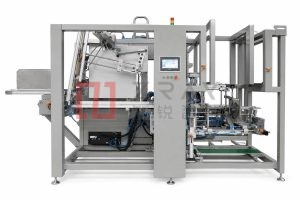
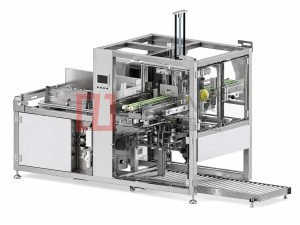
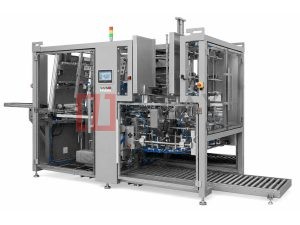
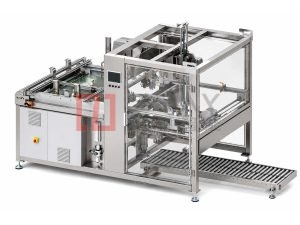
- Small wineries, 2,000–10,000 cases/day, one line: the Single-Piece Case Erector handles B and EB flute economically, with fast changeovers for the different case counts wineries run (6-packs, 12-packs, mixed pallets).
- Large export programs, 20,000+ cases/day, heavy BC flute: the Three-Piece Case Erector is the classic solution for heavy logistics cases. Three-piece construction uses stronger board per gram of material, and the machine is sized for deep trays and high-stacking designs.
- High-speed filling lines with case packing downstream: the Double-Head High-Speed Case Former keeps up at 40+ CPM and integrates directly with the case packer.
All three share the same core: mechanical folding, controlled vacuum, and compression sealing — the three functions that keep heavy wine cases square on a six-week ocean voyage.
Final Words
If you ship wine over long distances, the machine that erects the case has as much influence on your claim rate as the bottle you put inside. Specify double-wall board, keep the vacuum at −0.06…−0.08 MPa, run hot melt at 150–170 °C, and use a case former that mechanically squares and compresses the box before sealing.
We will help you size the machine against your actual blank and volume. Send us your board spec and daily output, and we will confirm the model, speed, and changeover plan within 24 working hours. FAT can be witnessed remotely using your own wine-case samples.
Email: [email protected]
WhatsApp: +86 13681839278
Request a quotation: Contact ZRAY — attach your case drawing and board spec, and we will confirm cycle time for your exact blank.
Want To Know More About Our Upgraded Machines?
Send your carton specifications and output demand, our engineer will provide free technical scheme & quotation
Latest Products
Subscribe To Get Latest News & Technical Guides
Leave your business email to receive free industry articles and new product updates