
RSC vs Die-Cut Boxes: Choosing the Right ZRAY Automatic Case Former (Up to 25 CPM, L 200-600 mm) | ZRAY
The RSC versus die-cut decision is a packaging engineer’s first fork in the road, and most plants get it wrong by defaulting to what they have always used. The RSC (Regular Slotted Container) is a rectangle scored in one sheet: four flaps on top, four on the bottom. A die-cut box is any box whose shape is cut and creased with a steel rule die, from a simple lock-bottom style to a fully custom gable or tray.
Both run on automatic case formers, but they are not interchangeable. The erector design, the blank feeding, the folding sequence, and the bottom sealing method all differ. This guide gives you the decision framework our engineers use when a customer asks which one to standardize on, including the numbers that matter: cost per case, forming speed, board yield, and the changeover impact.
The Core Difference Is Board Geometry, Not Brand
An RSC is defined by the fact that all four sides are cut from the same board area as the bottom. That makes the RSC the cheapest box per unit of enclosed volume. A die-cut box trades board economy for shape freedom: the die leaves gaps and tabs where the panel shape requires it, so the board yield per case is lower.
The practical consequences:
- RSC: lowest material cost, simplest forming, most board-efficient, but square and functionally limited.
- Die-cut: custom shape, better stacking and display, lock-tabs that eliminate glue, but higher board consumption and a slower forming cadence.
Neither is “better.” They serve different cost positions. The question is where your product sits on the volume-versus-customization axis.
Side-by-Side Comparison
| Factor | RSC box | Die-cut box |
|---|---|---|
| Material cost per case | lowest | 15-30% higher for the same volume |
| Board yield | near 100% of blank area | 70-90%, waste is the die’s sacrifice zone |
| Forming speed on erector | up to 25 CPM on single-head | typically 15-20 CPM, slower blank feed |
| Bottom sealing | glue or tape on flaps | often lock-tab, no adhesive needed |
| Stacking strength | good, creases parallel to flutes | depends on design; tabs reduce edge support |
| Blank storage footprint | flat rectangles, dense | irregular shapes, less dense |
| Setup / changeover | 10-15 minutes | 20-30 minutes, die changes are physical |
| Shelf display / branding | poor | excellent, custom cut-outs |
For most production environments the decision simplifies to: high volume and standard dimensions go RSC; low-to-mid volume with a marketing requirement goes die-cut.
Board Grades for Each Style
Both styles run on the same board families, but the requirements differ at the margins:
| Board grade | Caliper | Typical use |
|---|---|---|
| E-flute single-wall | 1.5-1.8 mm | Small die-cut retail packs, cosmetics |
| B-flute single-wall | 2.5-3.0 mm | Standard RSC, medium duty |
| C-flute single-wall | 3.5-4.0 mm | Heavy RSC, stacking loads |
| EB-flute double-wall | 4.5-5.5 mm | Die-cut boxes needing rigidity |
| BC-flute double-wall | 6-7 mm | Heavy freight, industrial RSC |
Liner basis weights run 200-500 gsm across this range. For a die-cut lock-bottom box, we specify at least B-flute: E-flute lock-tabs flex under repeated handling and the tabs pop open. For an RSC in a palletized stack, the flute direction matters more than the grade. The board’s flute direction must run parallel to the side panels, or the creases follow the flute lines and the box collapses under stacking load.
When the Brand Team Wins: Die-Cut Done Right
Some products sell on the shelf, and the box is the shelf. For those, die-cut is not a cost; it is the product. The rule we apply: if the retail display requirement drives the decision, accept the 15-30% material premium, but make the packaging engineer part of the die design. The most common mistake is an over-designed blank: a die with six tabs where two tabs and a fold would do, wasting board and slowing the erector.
Three rules for die-cut done right:
- Keep the die as simple as the product allows. Every extra tab is a blank that feeds slower and a failure point in the former.
- Verify the blank can be vacuum-fed: the solid panel areas must be large enough for the vacuum cups. A blank that is all cut-outs will not run on a standard former.
- Test the lock-tab fit on production board. Die tolerances are made for one board caliper; a 0.5 mm caliper change makes the tabs bind or rattle.
How the Case Former Differs Between RSC and Die-Cut
Feeding and opening
An RSC blank is a clean rectangle, so a vacuum arm opens it by pulling the center. A die-cut blank has tabs and cut-outs; the vacuum zones must be mapped to the solid panel areas or the arm grabs a tab and the box skews in the former. On our single-head machines the vacuum pattern is configurable per blank, and the changeover is a recipe in the HMI plus a tool-free vacuum cup adjustment.
Folding sequence
RSC folding is the classic sequence: open, bottom flaps in, bottom flaps closed, compression, top flaps out. Die-cut lock-bottom boxes fold differently: the tabs engage first, then the side panels swing in. The folder geometry is different, which is why a die-cut box run on an RSC-only erector never folds cleanly.
Bottom sealing
An RSC needs glue or tape on the bottom. A lock-bottom die-cut box needs neither, which removes the glue system from the critical path. The trade-off is box rigidity: a glued RSC bottom is stiffer than any lock-tab bottom of the same board.
PLC Alarms to Expect on Either Machine
| Alarm | Meaning | First check | Fix step |
|---|---|---|---|
| BOX_NOT_FORMED | Blank did not reach full cube | Vacuum pattern, blank geometry | Confirm the vacuum cup pattern matches the blank; re-map vacuum zones in HMI |
| VACUUM_LOW | Suction below setpoint | Filter, pump, hose leaks | Target supply above 0.4 MPa; clean filter; check hose clamps |
| FLAP_FOLD_ERROR | A flap missed the folder | Folder height, crease depth | Set folder height against caliper; check crease quality on incoming blanks |
| TAPE_BREAK | Tape web broken | Knife, brake tension | Re-thread, check knife gap 0.3-0.5 mm and brake tension |
If a lock-tab box trips BOX_NOT_FORMED repeatedly, check the tab clearance first: the die tolerances on tabs are tight, and a 0.5 mm interference is enough to make the box bind before it fully opens.
Stacking Strength: The Calculation Behind the Choice
Stacking strength is where RSC and die-cut part ways most visibly. A standard RSC resists stacking compression along straight, parallel creases. A die-cut box with tabs and cut-outs loses edge support exactly where the tabs interrupt the crease line, so for the same board it stacks weaker than an RSC of the same footprint.
A practical estimator for box compression strength (BCT):
- BCT (kgf) is proportional to ECT multiplied by the square root of the box perimeter and wall thickness.
- For a 600 x 400 x 300 mm RSC in 6 mm double-wall board at 32 ECT, expect a compression strength in the range of 1,000-1,200 kgf.
The number to compare is not the BCT itself but the safety factor: divide BCT by your pallet stack load. We target a minimum safety factor of 5 for long transit, 3 for local distribution. If your die-cut design delivers a safety factor below 3, strengthen the board grade or go back to RSC.
Run the compression test on a board tester or your box supplier’s machine before you commit to a style. A design that looks right on screen and fails the compression test is an expensive surprise on the pallet.
Pilot Run Before You Standardize
Do not decide the box style on paper alone. We recommend a pilot run on the actual erector with production board, production adhesive, and production line speed. What to check in the pilot:
- Vacuum opening: the blank opens fully on every cycle at full speed, no skew.
- Folding: all flaps land flat, creases intact, no doming.
- Bottom seal: sample joints pass the pull test and the load test.
- Changeover: time a full style change both ways, RSC to die-cut and back.
- Alarm rate: count BOX_NOT_FORMED events per thousand cycles; anything above 2 per thousand means the blank geometry needs adjustment before you lock the style.
The pilot takes one shift and answers the questions that no spreadsheet can. When the pilot passes, the style decision is no longer a guess.
Technical Reference: ZRAY Single-Head Case Former
| Parameter | Value |
|---|---|
| Speed | up to 25 CPM (single head) |
| Case size range | L 200-600 mm, W 150-480 mm, H 100-400 mm |
| Board caliper range | 1.5-7.0 mm |
| Bottom sealing | glue or tape, selectable |
| Air supply | 0.5-0.7 MPa |
| Changeover RSC to RSC | 10-15 minutes |
| Changeover RSC to die-cut | 20-30 minutes |
| Warranty | 12 months, remote diagnostics included |
How We Handle the “Both” Case
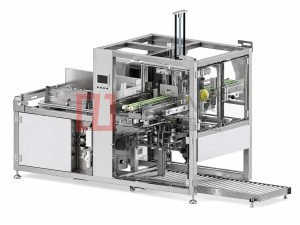
Most customers do not need one style; they need a ratio. When a plant runs 80% RSC and 20% die-cut, we recommend standardizing on the Single-Piece Case Erector with a configurable vacuum pattern and quick-change folders. The machine handles both blank families, and the die-cut changeover stays under 30 minutes.
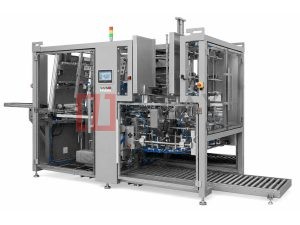
When the die-cut share grows past 50%, or when the RSC volume alone exceeds 500,000 cases per year, two dedicated machines usually beat one flexible one. For that profile, run the Double-Head High-Speed Case Former on the RSC line and keep a single-head for die-cut. The math favors separation: die-cut blanks run slower, and mixing them into a high-speed head drags the RSC throughput down with them.
Run the Numbers Before You Commit
Do not decide RSC versus die-cut on habit. Take your product dimensions, your annual volume, and your retail display requirement, and run the cost-per-case comparison across 3-5 years. Include board waste, forming speed, adhesive cost (RSC) versus die cost amortization, and warehouse footprint. Send us those numbers and we will tell you which machine configuration fits, within 24 working hours.
- Email: [email protected]
- WhatsApp: +86 13681839278
- Or fill in the inquiry form: Contact ZRAY
Every inquiry gets an answer within 24 working hours, and the first step is always a free feasibility review of your blanks and your production calendar.
Want To Know More About Our Upgraded Machines?
Send your carton specifications and output demand, our engineer will provide free technical scheme & quotation
Latest Products


Subscribe To Get Latest News & Technical Guides
Leave your business email to receive free industry articles and new product updates