
ZRAY Automatic Case Formers for Household Chemical & Detergent Packaging Lines (Up to 40 CPM, 0.5-0.7 MPa) | ZRAY
Household chemical and detergent lines are a special class of packaging problem. The product is corrosive, dusty, or both. The line runs at high speed across multiple SKUs, and the case has to survive warehouse humidity, chemical spillage, and pallet stacking loads measured in meters of cartons above it. A case erector that works perfectly on a beverage line can fail within months on a detergent line.
We build case formers for the packaging lines behind Mars and Duracell, and those same machines handle aggressive environments in household chemical plants. This guide covers what changes when you move a case former from a dry goods line to a chemical and detergent line: environment, board spec, machine construction, maintenance rhythm, and the alarms you need to treat seriously.
What Is Different on a Chemical Line
Three environmental factors drive the machine specification:
1. Dust loading
Detergent powder and granular filler generate fine dust that migrates into the machine. The dust is abrasive, alkaline, and hygroscopic. It settles on vacuum cups, creeps into folders and glue heads, and packs into air filters. On a standard machine, a dusty environment shortens filter life from months to weeks and starts the sliding parts on the same timeline.
The specification we use: sealed bearing housings, IP54 control cabinet minimum, positive-pressure cabinet cooling, and a vacuum filter sized for heavy dust with a weekly clean cycle. The electrical panel on our chemical-line machines is protected against dust ingress, and the air preparation unit sits inside the cabinet with an auto-drain.
2. Corrosive atmosphere
Chlorine-based and bleach products off-gas even when packed. In a closed packaging hall, that means the machine frame, the fasteners, and the electrical terminals sit in a mildly corrosive atmosphere year-round.
The specification we use: stainless steel or electro-galvanized fasteners throughout, painted mild steel frame with a chemical-grade coating, sealed connectors on all sensors and valves, and stainless covers on the areas exposed to splashes. Copper plumbing inside the cabinet is eliminated; the air lines are polyurethane with brass-free fittings.
3. Ex-zone considerations
Some fillers and aerosols create classified hazardous areas. If your line is in an ATEX or EAC Ex-zone, the electrical and pneumatic components must be selected to the zone rating, and the machine configuration changes. This is not an accessory; it is a design parameter. Send us your zone classification before quoting, and we configure the panel, the sensors, and the actuators to match.
Board Spec for Detergent and Chemical Cases
Detergent cases sit in humid warehouses, get damp cardboard exposure, and stack high. The board must resist moisture and carry stacking load:
| Parameter | Value |
|---|---|
| Board type | B- or C-flute single-wall for standard loads; BC-flute for heavy formats |
| Caliper | 2.5-4.0 mm single-wall; 6-7 mm double-wall |
| Liner basis weight | 200-250 gsm |
| Moisture-resistant treatment | water-resistant (WR) coating on outer liner for damp warehouses |
| ECT (minimum) | 28-32 (N/mm) depending on stack height |
| Burst strength | 150-200 psi minimum |
The WR coating changes how the case behaves on the erector: the coated surface is slicker, so vacuum cups need a slightly larger effective contact area, and hot-melt bond strength on the coated surface must be verified at FAT. If your board has a WR coating, tell us before we quote the glue system; standard glue settings for uncoated board will delaminate at the seam.
Technical Reference: ZRAY Case Former for Chemical Lines
| Parameter | Value |
|---|---|
| Speed | up to 40 CPM in double-head configuration |
| Case size range | L 200-600 mm, W 150-480 mm, H 100-400 mm |
| Board caliper range | 1.5-7.0 mm |
| Air supply | 0.5-0.7 MPa, filtered and dry |
| Air consumption | approx. 120 L/min at 25 CPM |
| Cabinet protection | IP54 minimum, positive pressure cooling |
| Bottom sealing | glue or tape, selectable |
| Changeover time | 10-15 minutes typical |
| Warranty | 12 months, remote diagnostics included |
Moisture, Dust, and the Case Itself
The board that works on a dry goods line is a different board in a chemical warehouse. Detergent and chemical warehouses are humid, and a case that absorbs moisture loses ECT, domes at the bottom, and fails the stack test months before the SKU is supposed to leave the warehouse.
Three things we recommend to every chemical plant:
- Spec a WR-coated outer liner for cases that sit longer than four weeks in storage. The coating costs a few percent of the board price and buys months of stack life.
- Add a blow-off station before the case former when dust loading is heavy. A short compressed-air blow-off removes the fines that would otherwise clog vacuum cups and glue nozzles. It pays for itself in filter life alone.
- Watch the glue-vs-tape decision in humid environments. PSA tape loses bond strength as it absorbs humidity over months in storage; hot-melt does not. For chemical cases stored long, hot-melt is the safer joint.
Multi-SKU Reality: Changeover Speed Wins
Detergent lines run dozens of SKUs: 1 L bottles, 1.5 L bottles, 5 L jerry cans, 20 L pails, refill pouches. Each SKU means a different case size, and changeover time is lost production. On our machines, the recipe system in the HMI stores case dimensions and machine settings per SKU, and a full size change takes 10-15 minutes. For high-mix lines, we recommend the double-head configuration with recipe-driven adjustment, so the changeover is a call-up of a saved recipe rather than a manual reset of eight parameters.
PLC Alarms That Matter on a Chemical Line
| Alarm | Meaning | First check | Fix step |
|---|---|---|---|
| AIR_PRESSURE_LOW | Supply below setpoint | Filter-regulator, compressor, dust-clogged auto-drain | Set 0.5-0.7 MPa at the manifold; check auto-drain; clean filter weekly in dusty halls |
| VACUUM_LOW | Suction below setpoint | Filter, pump, cups worn by abrasive dust | Clean or replace filter; check cup lips for abrasive wear; replace as a set |
| BOX_NOT_FORMED | Case did not open | Vacuum, board moisture, WR coating slickness | Verify vacuum cup contact; check board moisture 8-10%; confirm WR surface handling |
| GLUE_TEMP_LOW | Adhesive below setpoint | Heater, thermocouple | Restore 150-170°C; verify bond on WR-coated board before restart |
On a chemical line, VACUUM_LOW is the alarm to watch. Abrasive dust wears vacuum cup lips measurably within weeks, and a worn cup opens cases skewed. Log the vacuum pressure daily; a 10% drop from the baseline is the trigger to replace the cups.
Maintenance Rhythm for Chemical and Detergent Lines
| Interval | Task |
|---|---|
| Daily | Wipe dust from vacuum cups and folders; check air pressure and auto-drain; inspect first case of each shift |
| Weekly | Clean vacuum filter; check cup lip wear; verify cabinet pressure and positive cooling |
| Monthly | Replace vacuum cups if lip wear exceeds 20%; inspect sealed bearings for dust ingress; check glue head for contamination |
| Quarterly | Full machine cleaning, including interior of cabinet; re-torque fasteners; check sensor connectors |
| Half-year | Replace seals and pneumatic wear parts; test seam bond on WR-coated board; inspect frame coating for corrosion |
Keep the cabinet clean. Dust on electrical terminals inside a mildly corrosive atmosphere is how you get intermittent sensor faults that appear only at night shifts.
Machine Construction Details That Matter in a Chemical Hall
The environmental specification is not just about the cabinet. These are the construction details we apply on chemical-line machines:
- Motors: IP65-rated drive motors on all rotating axes, so dust and splash cannot enter the bearings.
- Pneumatic components: SMC cylinders and valves with stainless steel piston rods; standard chromium rods pit in a chlorine atmosphere.
- Fasteners: stainless steel throughout, including the cabinet interior and the guards.
- Frame coating: two-pack chemical-grade paint on the mild steel frame; a standard paint film will blister within a year in a bleach hall.
- Sensors: sealed connectors, no exposed copper terminals, and proximity sensors rated for the environment.
- Air preparation: auto-drain filter-regulator with a mist separator, mounted so condensate cannot drain back into the machine.
- Cable management: all cable runs in sealed conduit; open cable trays accumulate dust and hold it against the wiring.
None of this shows on a brochure photo, but it is the difference between a machine that runs five years in a detergent hall and one that starts failing at eighteen months.
Line Integration: The Signals Your Erector Needs
A chemical line is not one machine; it is a string of machines that must fail together. The case former needs clean signal interfaces with the upstream filling line and the downstream case packer:
- E-stop chain: the erector’s emergency stop must open the same safety circuit as the filler, so a jam at the former stops the filler before it dumps product on the floor.
- Start/stop handshake: the erector must signal “ready for case” and receive “case fed” from the filler, with a timeout so a missing case does not run the glue head dry.
- Alarm forwarding: AIR_PRESSURE_LOW and VACUUM_LOW on the erector should be visible on the line SCADA, not only on the machine HMI.
- Recipe download: when the line switches SKU, the erector recipe should be selectable from the line controller, not re-entered at the machine.
We deliver these interfaces as standard signal wiring with documented pinouts, and they can be brought up on Profinet or EtherCAT depending on your line architecture. Confirm your PLC protocol before FAT so the integration test happens on the machine, not after delivery.
The Right Machine for Your Line
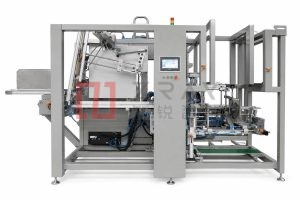
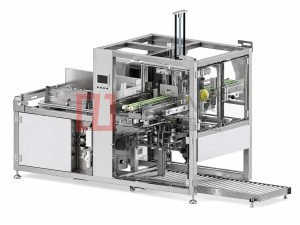
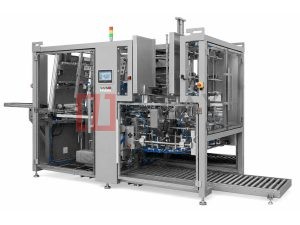
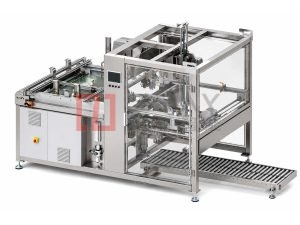
If your chemical line runs high volumes with many SKUs, the Double-Head High-Speed Case Former with recipe-driven changeover and the dust/corrosion package is the configuration we deliver most often for detergent plants. For smaller lines, the Single-Piece Case Erector carries the same environmental protection options and the same glue or tape system.
Let Us Spec the Machine for Your Environment
Chemical and detergent packaging is not a generic case erecting job. The board coating, the dust loading, and the Ex-zone classification all change the machine spec. Send us your line speed, your SKU list, your board spec with coating details, and your zone classification, and we will return a machine configuration with the right environmental package, within 24 working hours.
- Email: [email protected]
- WhatsApp: +86 13681839278
- Or fill in the inquiry form: Contact ZRAY
Every inquiry gets an answer within 24 working hours, and the first step is a free review of your environment and your case spec against the machine’s duty rating.
Want To Know More About Our Upgraded Machines?
Send your carton specifications and output demand, our engineer will provide free technical scheme & quotation
Latest Products
Subscribe To Get Latest News & Technical Guides
Leave your business email to receive free industry articles and new product updates