
ZRAY Case Erectors for Craft Breweries: Eliminating Bottom-Flap Failure in 24-Packs (Up to 30 CPM, BC Flute 6–7 mm) | ZRAY
Nothing kills a craft brewery’s shift like a case that drops its bottom. A 24-pack of 355 ml cans weighs 8.5–9 kg; a 24-pack of 500 ml cans is 12.5–13.5 kg. That load sits on two glued bottom flaps from the case erector to the retail shelf. When the joint fails, you lose product, you lose time, and — in a market where retailers reject damaged shippers — you lose shelf placement. This article explains why bottom-flap failures happen on 24-pack lines, how ZRAY machines are set up to eliminate them, and what you should check in your own process.
Why the bottom flap fails in a 24-pack line
A bottom-flap failure looks like a box problem, but it is almost never the box alone. In the failures we have diagnosed across beverage and brewery lines, the root cause falls into one of these buckets:
- Adhesive temperature drift. Glue tank at 150°C on the HMI, but the actual bead temperature at the applicator is 138°C because the hose heater is underpowered or a thermocouple is mis-seated. The adhesive never wets the board properly.
- Compression time too short. The compression section holds the flaps for 2 seconds, but on BC double-wall board at 16°C plant temperature, EVA hot melt needs 3–5 seconds to build the joint. The case exits with a half-cured bond.
- Board moisture. Breweries run cold, humid halls — 70–85% RH is common. Moist board pulls heat out of the adhesive bead and shortens open time below the fold-to-compress window.
- Flap stiffness mismatch. A 450–500 gsm BC board has major flaps that want to spring back. If the folding cams are timed for lighter board, the major flap lands late and the glue line is only half-covered.
- Over-compression crush. On the opposite end, too much down-pressure at the compression station crushes the flute on a 6–7 mm board and the joint delaminates along the crease.
The good news: each of these has a measurable fix, and most of them are configured in the machine, not fixed by luck on the line.
What a 24-pack actually needs from the board
Craft 24-packs typically run one of two constructions. Know which one you have before you tune anything:
| Construction | Flute | Caliper | Grammage | Typical use |
|---|---|---|---|---|
| Can sleeve / wrap (single) | E | 1.5–1.8 mm | 250–300 gsm | 4×6 can trays, printed side walls |
| RSC case (single wall) | B or C | 2.5–4.0 mm | 300–400 gsm | 24×355 ml cans, medium loads |
| RSC case (double wall) | BC | 6.0–7.0 mm | 450–500 gsm | 24×500 ml cans, export shippers |
| RSC case (double wall, high-print) | EB | 4.5–5.5 mm | 400–450 gsm | premium craft branding, retail-heavy |
Rule of thumb we use at ZRAY: above 10 kg packed weight, go double wall. A 24-pack of 355 ml cans at 8.5–9 kg can ride on C flute; the 12.5 kg 500 ml pack gets BC or EB. The moment you put the case on a pallet, 10+ layers of 12.5 kg each stack on the bottom case’s flaps — the joint has to carry that compression for weeks.
The four fixes we configure into ZRAY brewery machines
Fix 1 — glue temperature with a verified setpoint
We set the glue tank at 155–165°C for brewery lines (mid-window of the 150–170°C range) and we verify the bead temperature at the applicator, not just the tank. On the HMI you see both values. If tank and applicator drift more than 6°C apart, the machine flags a warning — not after the case fails, but before the next case is fed.
Fix 2 — compression time scaled to board weight
Compression is pneumatically timed, not fixed. The recipe in the PLC knows your board grade:
- E/B single wall, light load: 2–3 seconds
- C single wall, 24×355 ml: 3 seconds
- BC/EB double wall, 24×500 ml: 4–5 seconds
When you switch board grades, the HMI asks you to confirm the recipe, and the compression window follows. No manual valve twiddling, no “we always ran it at 3”.
Fix 3 — flap fold timing for stiff double wall
The folding cams on ZRAY machines have independent timing for minor and major flaps. On double-wall board we advance the major-flap cam slightly so the flap lands flat and covers the full glue line before compression starts. This is a 10-minute adjustment during commissioning, and it is the difference between a joint that holds and one that peels on the truck.
Fix 4 — moisture compensation at the magazine
Warped, moist blanks are the number-one cause of intermittent bottom-flap problems — the machine runs fine for 40 minutes, then a warped blank folds slightly late and the joint is partial. We fit the magazine with a flap-support guide and a board-flattening pressure bar, and we recommend blank storage below 65% RH. If your warehouse sits at 80% RH, the fix is environmental, and no machine setting will fully compensate.
Technical parameters for a brewery 24-pack line
A ZRAY erector sized for a craft brewery running 24-packs looks like this:
| Parameter | Value |
|---|---|
| Output speed | Up to 30 CPM (single head) |
| Case size range (L × W × H) | 250–450 × 150–350 × 120–350 mm |
| Board grades | B/C single wall, BC/EB double wall |
| Glue system | EVA hot melt, 15–20 L tank |
| Tank temperature | 150–170°C (155–165°C typical brewery setpoint) |
| Compression time | 2–5 s, recipe-controlled |
| Air supply | 0.5–0.7 MPa, ~600 L/min |
| Control | Siemens PLC, Schneider contactors, SMC pneumatics |
| Footprint | ~2.5 × 1.5 m with glue unit |
PLC alarms that protect the bottom joint
We wire the bottom-flap critical points into the alarm system. If any of these trips, the machine stops before another case is made:
- Glue Temp Low (A-210): tank or applicator below setpoint. Recovery: check heater coil, thermocouple seating, tank fill level; verify HMI vs actual bead temperature.
- Glue Pressure Low (A-211): pump pressure under 0.3 MPa. Recovery: check pump diaphragm, filter screen, air in the feed line.
- Compression Timeout (A-213): the compression cylinder did not complete its stroke within the recipe window. Recovery: check solenoid valve, regulator setting, and cylinder seals.
- Flap Not Seated (A-104): the minor flap sensor did not confirm position before major flap fold. Recovery: check flap folder cams, board warp, and crease-line quality.
Maintenance schedule for a brewery case erector
| Interval | Task |
|---|---|
| Daily | Purge glue nozzles 5 s before startup; verify tank and applicator temps on HMI; wipe photoeyes; check compression cylinders for leaks |
| Weekly | Drain air filter condensate; check glue pump output; inspect compression belt for adhesive build-up; check flap folder cam bolts |
| Monthly | Clean glue tank, replace filter screen; verify applicator bead pattern on a test blank; check board magazine guides for wear |
| Quarterly | Re-learn board profile after major grade changes; check cam timing marks; inspect all SMC valve seals; check heater coils |
| Semi-annual | Full tank teardown and heater/thermocouple check; replace belts and vacuum cups; verify CPM against spec |
Is your line at risk? A quick self-check
Run this checklist next time the bottom joints look marginal:
- Is the tank setpoint between 150–170°C, and is the applicator bead within 6°C of it? If not, you have a heat-loss problem in the hose.
- Is compression time set for your board weight? A 24×500 ml double-wall case at 3 seconds of compression is under-bonded. Run 4–5 seconds.
- Are the major flaps covering the full glue line? Lay a test case flat and peel a flap: the fiber-tear pattern should cover at least 80% of the glue area. Below that, fix the cam timing or the bead pattern.
- What RH is your blank warehouse? Above 65% RH, expect intermittent failures no matter what the machine does.
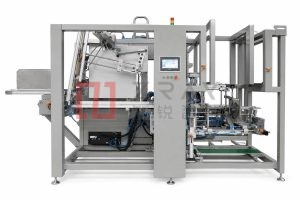
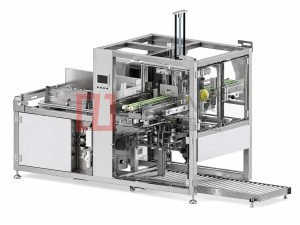
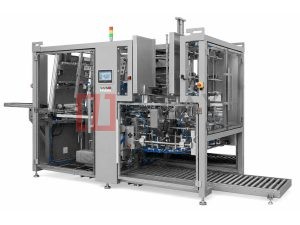
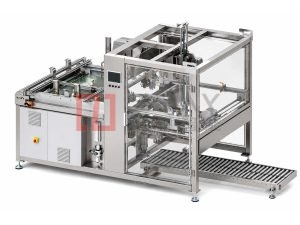
If you answer “no” to any of these, the fix is usually configuration, not a new machine. But if your line runs 500,000+ cases a year and you need both speed and reliability on heavy 24-packs, look at the Double-Head High-Speed Case Former — it keeps independent glue temperature per head and never lets one head’s stoppage kill the other. For most craft breweries running 50,000–200,000 cases a year, the Single-Piece Case Erector is the right footprint: full bottom-flap control, recipe-based compression, and a magazine sized to your blank. If you ship 24-packs in heavy export shippers on three-piece construction, the Three-Piece Case Erector removes the bottom-flap variable entirely.
We will run your 24-pack blank before you buy
FAT acceptance at ZRAY means we run your actual 24-pack blank, your board grade, at your target speed, then measure the bottom joint — we peel flaps in front of you and show the fiber-tear coverage. You see the failure rate on your own board before you pay the 40% FAT balance. Every machine ships with CE & EAC certification and a 12-month warranty.
Email [email protected] or WhatsApp +86 13681839278. Send your blank dimensions, board grade, can size, and annual volume, and we will confirm the right configuration and run a pre-shipment test on your blanks. Prefer the form? Use our contact page and a sales engineer will reply within 24 working hours.
Want To Know More About Our Upgraded Machines?
Send your carton specifications and output demand, our engineer will provide free technical scheme & quotation
Latest Products
Subscribe To Get Latest News & Technical Guides
Leave your business email to receive free industry articles and new product updates