
How to Choose the Right Case Erector for Your Packaging Line: A Complete Buyer’s Guide
Choosing an automatic case erector isn’t just about replacing manual labor; it’s about protecting your entire downstream packaging line from unexpected downtime. A minor cardboard jam at the erection stage can halt your tape sealers, palletizers, and shipping schedules in seconds.
Whether you are upgrading from manual box folding or replacing an outdated machine, this guide walks you through the precise technical and operational factors engineers and procurement managers must evaluate before signing a purchase order.
1. Calculate Your Real Speed Requirement (Beyond Nameplate CPM)
Most manufacturers market machines by Cases Per Minute (CPM)—for example, 15 CPM or 30 CPM. However, relying solely on nominal CPM is the #1 mistake buyers make.
To determine your actual speed requirement, calculate your Net Effective Output:
\[ \text{Required Machine CPM} = \frac{\text{Target Hourly Output}}{\text{Line Efficiency Factor (0.85)} \times 60} \]
Key Engineering Considerations:
- Intermittent vs. Continuous Motion: For speeds under 20 CPM, intermittent motion (pneumatic-driven) is cost-effective and reliable. For lines demanding 30+ CPM, continuous motion (servo-driven) is mandatory to prevent mechanical wear and box deformation.
- Upstream Buffer Capacity: Your case erector must run 15–20% faster than your primary product feeding line to build a buffer of erected boxes.
2. Match the Erector Mechanism to Your Box Quality & Flute Type
Not all corrugated boxes are created equal. Humidity, recycled paper content, and flute profiles heavily dictate machine success.
Which Pickup Mechanism Do You Need?
- Single-Side Vacuum + Mechanical L-Arm: Great for rigid, high-burst-test boxes. However, if your supplier uses high percentage recycled paper, boxes may resist square opening.
- Opposing Vacuum (Dual Arm) Opening: Pulls the box simultaneously from both sides. Crucial for recycled cardboard or warped sheets that have absorbed ambient factory humidity.
Pro Tip from Our Engineers: If your cardboard moisture level exceeds 8%, standard suction cups will lose up to 30% of their holding force. Ensure your supplier outfits the machine with high-friction, multi-bellow silicone suction cups and reliable pneumatic components (such as SMC pneumatics).
3. Tape vs. Hot Melt Glue Sealing: The Total Cost of Ownership (TCO)
The bottom-seal method impacts both initial machinery cost and long-term consumable expenditure.
| Evaluation Metric | Pressure-Sensitive Tape | Hot Melt Adhesive (Glue) |
|---|---|---|
| Initial Machine Cost | Lower ($) | Higher ($$) |
| Consumable Cost | Higher per box | Lower per box |
| Changeover Time | ~1 minute (roll replacement) | ~30 minutes (warm-up & nozzle cleaning) |
| Ideal Environment | Standard warehouse conditions | Cold storage, high humidity, or heavy loads |
| Tamper Resistance | Moderate | High (box tears if forced open) |
4. Changeover Efficiency: Toolless vs. Fully Automated
If your line runs multiple box sizes per shift, Changeover Downtime will kill your overall equipment effectiveness (OEE).
- Manual Toolless Adjustment: Uses hand cranks, digital counters, and quick-release levers. Takes an operator 5 to 10 minutes with proper training.
- Motorized / Servo Automatic Adjustment: Operator selects a recipe on the HMI touchscreen (like Siemens PLC systems); internal motors adjust the magazine, vacuum arms, and side belts automatically in under 60 seconds.
Rule of Thumb: If you change box sizes more than 3 times a day, invest in recipe-driven automated changeovers.
5. Pre-Purchase Checklist: 5 Questions to Ask Your Supplier
Before finalizing your order, ask your machine builder these critical integration questions:
- “What is the maximum allowable box squareness tolerance on your machine?” (Standard should be within ±1.5 mm across diagonals).
- “Does the cardboard magazine use a positive-drive powered belt or a gravity feed?” (Powered magazines handle heavier stacks without misfeeding).
- “Are replacement pneumatic and electrical components non-proprietary?” (Ensure standard components like SMC pneumatics or Siemens PLCs can be sourced locally).
- “How does the system handle low-tape or empty-magazine alerts?” (Look for beacon lights and early-warning sensors to prevent dry runs).
- “Can we send 50–100 sample flats of our actual supplier’s boxes for a live FAT (Factory Acceptance Test)?”
Need Help Sizing Your Case Erector?
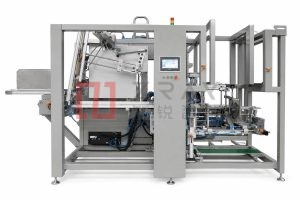
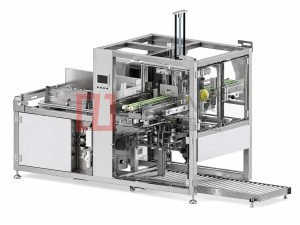
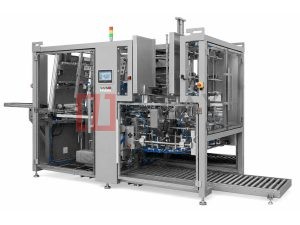
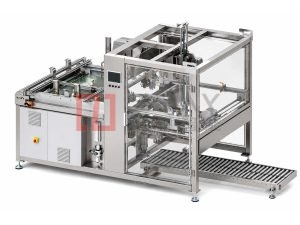
Every packaging line has unique layout constraints and box specifications. Contact our engineering team today or explore our flagship Single-Piece Case Erector to review CAD drawings, technical spec sheets, and live operation videos.
Want To Know More About Our Upgraded Machines?
Send your carton specifications and output demand, our engineer will provide free technical scheme & quotation
Latest Products
Subscribe To Get Latest News & Technical Guides
Leave your business email to receive free industry articles and new product updates